Key takeaways
- Arditi et al. found that refusal in 13 open chat models, from 1.8B to 72B parameters, is carried by a single direction in the model's internal state.
- Abliteration edits that direction out of the weights, and the paper found most benchmark scores barely moved, though TruthfulQA dropped in every model tested.
- Researchers now use abliteration to test safety training, and 2025 and 2026 preprints report fine-tuning methods that make models more resistant to it.
Abliteration is a way to stop an open-weight language model from refusing requests by editing its weights, with no retraining. It rests on a finding from the paper Refusal in Language Models Is Mediated by a Single Direction by Andy Arditi, Neel Nanda and five co-authors: in the chat models they tested, the decision to refuse is carried by one direction inside the model, and removing that direction removes most refusals.
The term spread through Maxime Labonne's Hugging Face post Uncensor any LLM with abliteration from June 2024. This week a widely used tool for it lost its maintainer, and attackers used the word as bait.
What the refusal direction is
A language model turns each word of a prompt into a long list of numbers, a vector, and passes it up through its layers. The running total every layer reads from and writes to, the residual stream, works like the model's working memory.
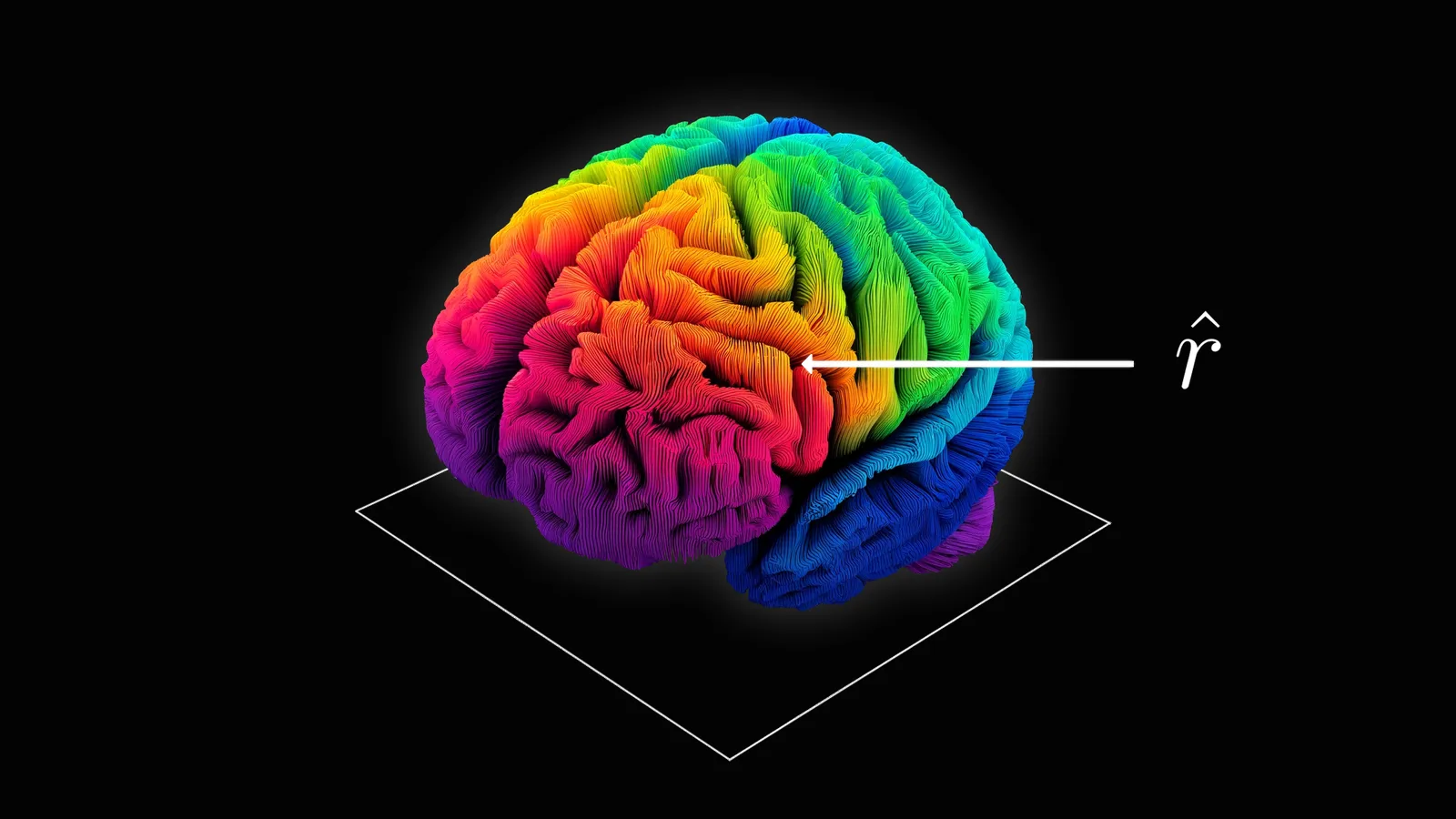
Arditi and his co-authors asked whether "this request is harmful, so refuse" shows up as a pattern in that working memory. It does, and the pattern is simple: a single direction in the space of those vectors. When the model's internal state points strongly that way, it refuses. When it doesn't, it answers.
They tested 13 open chat models from 1.8 billion to 72 billion parameters, from the Qwen, Yi, Gemma, Llama-2 and Llama-3 families. The direction showed up in all of them.
How it is found from contrasting prompts
The method is a difference of averages. The team fed each model 128 harmful instructions, taken from public safety benchmarks such as AdvBench and HarmBench, and 128 harmless ones from the Alpaca dataset. At each layer they averaged the model's internal state over the harmful set and over the harmless set, then subtracted one average from the other.
That gives one candidate direction per layer and token position. The authors kept the one that best removed refusals on a held-out set of prompts while changing the model's behavior on harmless prompts the least. They call the method a heuristic and the paper "more of an existence proof", with better methods left for later work.
The direction works both ways. Removing it made the models answer harmful requests. Adding it made them refuse harmless ones: in one of the paper's examples, Gemma 7B refuses to list the benefits of yoga.
How the weights are orthogonalized
The paper shows the direction can be removed from the weights themselves. Every matrix that writes into the residual stream (the embeddings, the attention outputs and the MLP outputs) is edited so that it can no longer write anything along the refusal direction.
The result is a normal model file. The authors call it a rank-one edit, about the smallest change a weight matrix can get. They write that it can jailbreak a 70-billion-parameter model "using less than $5 of compute".
What it costs in quality
Less than you might expect. The paper compared five models before and after the edit on four benchmarks. Most scores barely moved: Llama-3 70B went from 79.9 to 79.8 on MMLU, a broad knowledge test, and from 91.2 to 90.8 on GSM8K, a set of grade-school math problems. The authors say that for most models the changes stay within the margin of error.
One benchmark dropped every time: TruthfulQA, which checks whether a model repeats common misconceptions. Llama-3 70B fell from 61.8 to 59.5 and Yi 34B from 55.4 to 51.9. The authors note that part of TruthfulQA overlaps with refusal-style questions.
Practice has been rougher than the paper. Labonne reported that his abliterated Daredevil-8B model scored worse than the original on every benchmark he ran. He recovered most of the drop with a further round of preference training (DPO), though not on GSM8K.
Heretic, an open-source tool by Philipp Emanuel Weidmann, set out to shrink that cost. It searches automatically for settings that cut refusals while keeping outputs on harmless prompts close to the original, measured by KL divergence. Its default method is now a variant it calls Arbitrary-Rank Ablation; classic abliteration, credited to Arditi et al., remains an option. The README says Heretic models "compare favorably" with those from competing tools on MMLU and GSM8K, citing outside comparisons rather than its own numbers. The repository had about 43,700 stars on November 28, 2026.
Heretic's maintainer steps away
On November 28, 2026, Weidmann posted an issue titled Farewell and archived the repository, which makes it read-only. He wrote that he is archiving it "to preserve it in its current, high-quality state" and to stop spam, and left it to contributors to decide whether to continue it elsewhere, without naming a successor. The post drew more than 800 points on Hacker News the same day.
"Abliterated" as bait
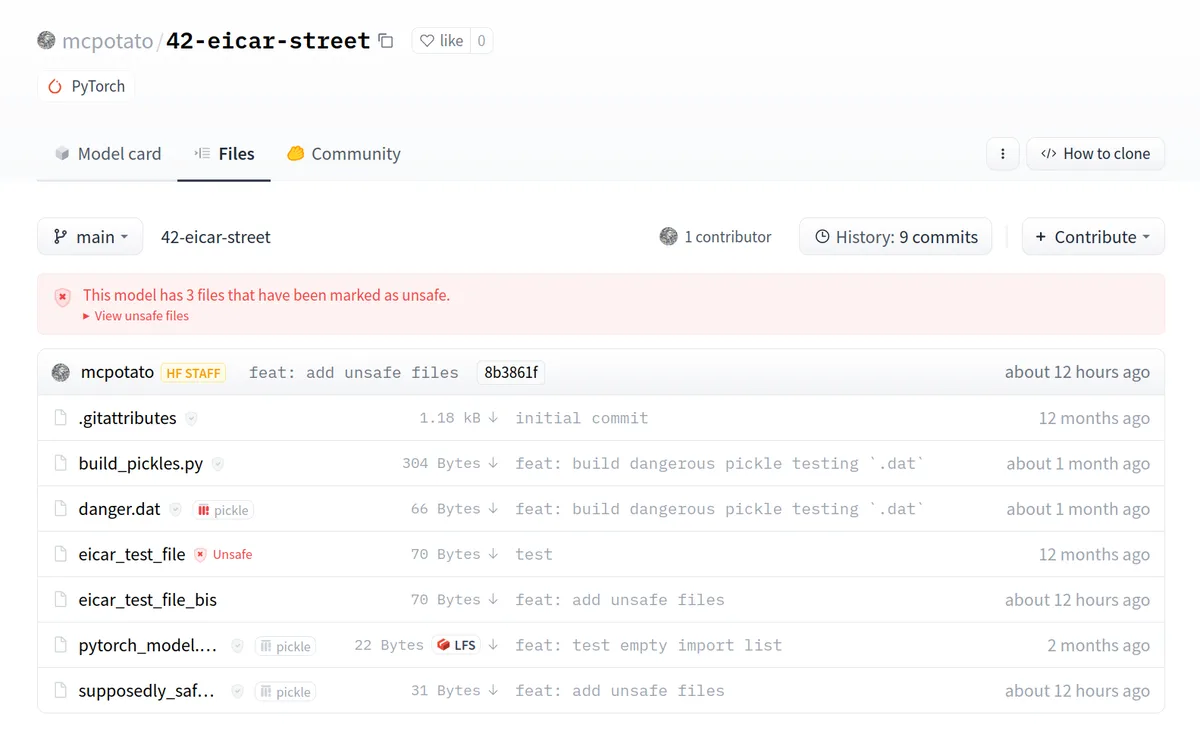
On November 27, the security blog Malspark reported five malicious GGUF model files on Hugging Face, some posing as uncensored models, including one billed as an abliterated Qwen3.5 9B. One group hid a Windows remote-access program after the model's weights and changed the chat template so the model would print a command that runs it. The five repositories had 2,428 downloads by then, and Hugging Face disabled all five by November 28. Our report on the malicious GGUF models has the details. An abliterated model is only as trustworthy as whoever uploaded it.
The safety debate
The original authors read their result as a warning. Their abstract says the results show "the brittleness of current safety fine-tuning methods": the refusals that companies train into open models can be removed with a cheap edit once the weights are public. They also say their method lowers the bar for jailbreaking open models only marginally and does not substantially change the risks of releasing open weights.
People who make abliterated models frame it differently. Labonne's post calls refusal "crucial for preventing misuse" but says it limits the model's flexibility, and Heretic describes its job as removing "censorship".
The paper has limits too. It tested open models up to 72 billion parameters and says the result may not hold for larger or proprietary ones. And the authors admit they don't know exactly what the direction means; it may track a concept like harm or danger rather than refusal itself.
How researchers are building defenses
Researchers now use abliteration as a stress test for safety training. A 2025 paper, An Embarrassingly Simple Defense Against LLM Abliteration Attacks, trains models to explain their refusals at length instead of refusing in one line. That spreads the refusal signal across many tokens instead of one direction. The authors report that refusal rates fell by at most 10% after abliteration, against 70% to 80% for ordinary models, on Llama-2 7B and two small Qwen2.5 models.
A 2026 paper by Kevin Kuo, Virginia Smith and Chhavi Yadav, Open-Weight LLM Fine-Tuning Defenses are Susceptible to Simple Attacks, found that abliteration and a second cheap attack raised attack success against models with existing safeguards from under 10% to between 16% and 96%. Their fix, Abliteration-Resistant Tuning, adds an abliteration-based objective to training and cut those success rates by 10% to 20%.
Both are preprints tested on a few models, and neither stops the attack outright. They confirm what the original paper showed: if a safety behavior lives in one place in a model, anyone with the weights can find that place.
Frequently asked questions
What does abliteration mean?
Abliteration is the community name for removing the refusal direction from an open-weight language model's weights, so the model stops declining requests without being retrained. It builds on the 2024 paper by Arditi et al. on refusal being mediated by a single direction.
What is an abliterated model?
It is an open-weight model whose weights were edited so it can no longer represent the refusal direction. It answers requests the original model would refuse, and it can score a little lower on some benchmarks, such as TruthfulQA.
Are abliterated models on Hugging Face safe to download?
Not automatically. On November 27, 2026, Malspark reported five malicious GGUF models on Hugging Face, some posing as uncensored or abliterated models, that tried to get users to run hidden malware.
Does abliteration make a model worse?
Usually a little. In the original paper most scores stayed within the margin of error, but TruthfulQA fell for every model, and Maxime Labonne reported his abliterated 8B model scored lower on every benchmark until he fine-tuned it again.
Sources
- Refusal in Language Models Is Mediated by a Single DirectionarXiv (Arditi et al.)
- Uncensor any LLM with abliterationHugging Face (Maxime Labonne)
- HereticGitHub (Philipp Emanuel Weidmann)
- Farewell (issue #601)GitHub (Philipp Emanuel Weidmann)
- Malicious GGUF models on Hugging FaceMalspark
- An Embarrassingly Simple Defense Against LLM Abliteration AttacksarXiv (Abu Shairah et al.)
- Open-Weight LLM Fine-Tuning Defenses are Susceptible to Simple AttacksarXiv (Kuo, Smith, Yadav)
- Farewell, Hacker News discussionHacker News