Key takeaways
- ChatGPT Health is open to logged-in Free, Go, Plus and Pro users in the U.S., and reached Android, the desktop app, dots and sites on November 19, 2026.
- It can connect Apple Health on iPhone, Health Connect on Android, supported U.S. medical records, One Medical and Function Health.
- OpenAI says synced Health data is not used to train its foundation models or target ads, and is deleted within 30 days of disconnecting.
ChatGPT Health is a part of ChatGPT that can read health data you choose to connect, such as Apple Health, Android Health Connect and your medical records, and use it to personalize answers. As of November 22, 2026, it is open to logged-in Free, Go, Plus and Pro users in the U.S., and on November 19 OpenAI expanded it to Android, the desktop app, dots and sites.
OpenAI says Health is "designed to support, not replace, medical care" and is not intended for diagnosis or treatment.
What ChatGPT Health does
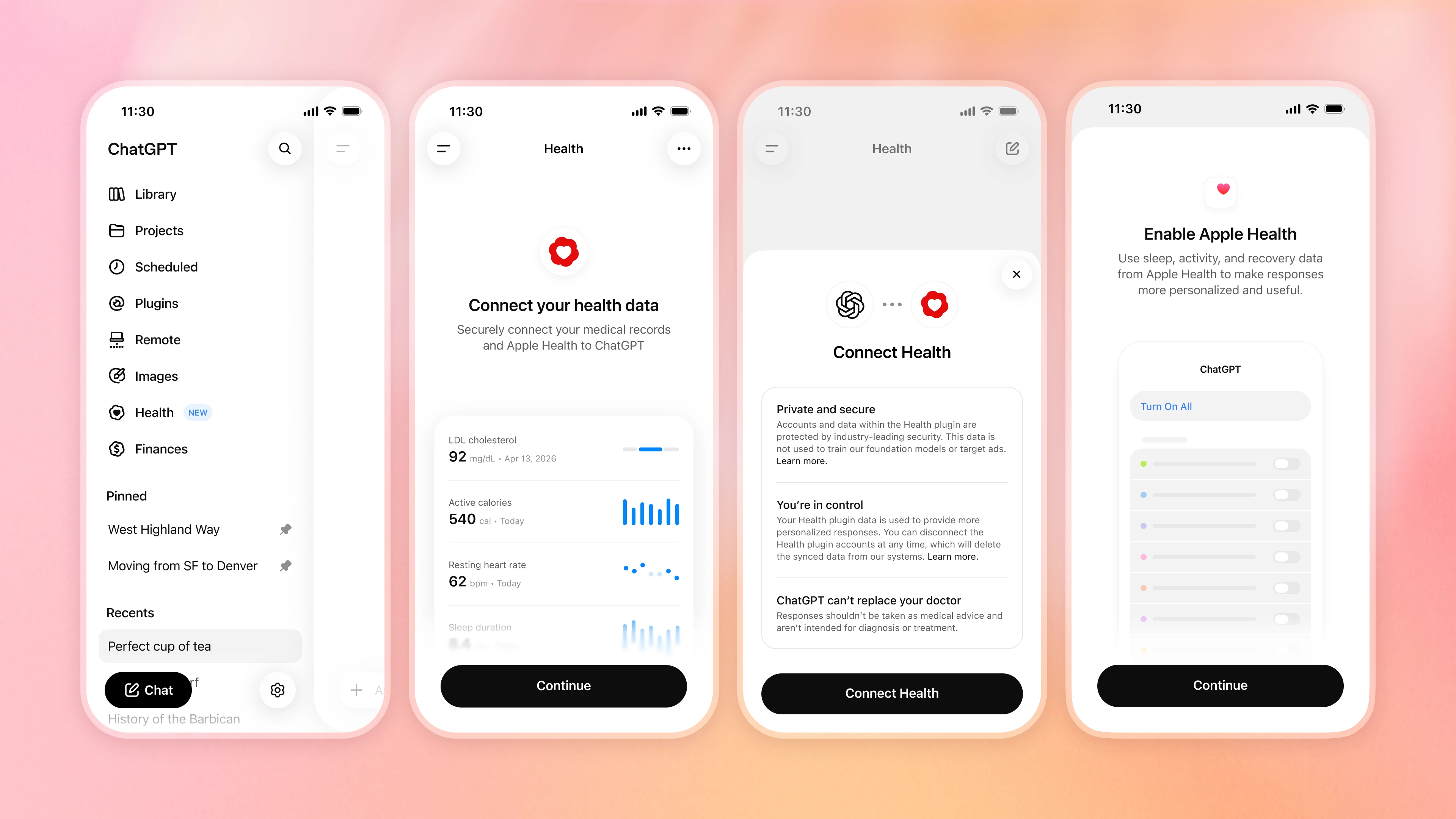
Health adds a Health tab to ChatGPT. According to OpenAI's help center, the tab shows the information you've connected, such as lab results, medications, activity and sleep, and you can ask questions about it there or in any normal chat. Since September 28, you can select a chart, metric or record in the tab to get an explanation of it based on your own data.
OpenAI's intended uses include spotting trends, preparing for appointments and understanding test results. You can also ask health questions without connecting anything.
The November 19 update added two new places to use it. A dot, ChatGPT's always-on agent that keeps working between conversations, can make suggestions from your Health data. OpenAI's examples are moving a workout when a meeting gets in the way and reminders about preventive care based on your connected records. In the desktop app, you can build a site from your data; OpenAI's example is a page that tracks marathon training against a plan.
Who can use ChatGPT Health, and where
The rules as of November 22, 2026:
| Question | Answer |
|---|---|
| Plans | Free, Go, Plus and Pro |
| Country | U.S. only |
| Age | 18 or older at the July launch; linked teen accounts can have it turned off by a parent |
| Apps | Web, iOS, Android and the ChatGPT desktop app |
| Dots | Needs dot access as well. The release notes say dots are for Pro users |
| Business, Enterprise, clinicians | Not covered. Health is not HIPAA-eligible |
OpenAI lists no extra charge for Health. Dots depend on your plan: the dots help article says Pro has them and Plus is getting them gradually. See how dots work and what ChatGPT Go includes.
How it got here
OpenAI first introduced ChatGPT Health on January 7, 2026, as a separate space with its own memories and a waitlist. Users in the European Economic Area, Switzerland and the UK were excluded.
On July 23, 2026, it launched Health in ChatGPT to U.S. users 18 and older on web and iOS, and made Health usable from any conversation rather than only inside a separate space. Older Health chats and files from the earlier version stay in a Health project under Projects and don't move into the new tab.
What data ChatGPT Health can connect
The help center lists these sources:
- Apple Health, on iPhone only. You choose which data categories to share.
- Health Connect, on Android only, added on November 19.
- Medical records from supported U.S. hospital systems and provider portals.
- One Medical and Function Health.
Wearables and fitness apps reach ChatGPT through Apple Health or Health Connect, not directly. The help center names WHOOP, Oura, Garmin, Strava and MyFitnessPal. The app has to share its data with Apple Health or Health Connect first, and some of an app's own scores may not come across.
Health only sees what those apps share. It can't write anything back: it can't edit your provider's records or change data in Apple Health, Health Connect or any other connected account. Corrections you make in a chat only update your Health profile inside ChatGPT.
How to turn on ChatGPT Health
These steps come from OpenAI's help center:
- Update to the latest ChatGPT app.
- Open Health in the sidebar. If it isn't there, look in the Explore menu on iOS, Android and desktop, or the more options menu (•••) on the web.
- Select Connect Health or Get started.
- Pick a source: Apple Health, Health Connect, medical records or another supported source.
- Finish the sign-in and permission steps.
- Wait for the sync, then review or add your current conditions, medications and family history.
To add a source later, go to Health > Accounts > Add account. For a medical record, search for your provider and complete its sign-in.
ChatGPT doesn't always pull in Health data on its own. The help center says typing @Health in a message makes it more likely.
How to disconnect a source
- Medical records: go to Health > Accounts, select the more options menu (•••) next to the account, then Remove account.
- Apple Health or Health Connect: go to Health > Accounts, select •••, then Manage, then Disconnect.
When you disconnect, OpenAI says the synced data is deleted from its systems within 30 days. Chats that already used that data stay in your history until you delete them yourself.
Permissions sit under Settings > Plugins > Health, where the default is "Allow low-risk actions".
What OpenAI says about privacy and training
OpenAI makes four main promises, across the help center and the Health Privacy Notice, last updated November 19, 2026:
- No training on synced data. Data from connected sources "is not used to train our foundation models or target ads," the help center says.
- Conversations are a different matter. Chats that mention your health data may be used to improve models, depending on your settings. You turn this off with "Improve the model for everyone" under Settings > Data Controls.
- Encryption. Chats are encrypted at rest and in transit, and Health data gets extra protections on top, according to OpenAI.
- No selling. The privacy notice says OpenAI does not sell personal data, including Health data.
Memory changed between versions. In January, Health had its own memories that never reached your other chats. Now, with memory on, Health conversations can create memories, but OpenAI says no memories are created directly from synced data. Use Temporary Chat, turn memory off under Settings > Personalization, or keep health chats in a project with project-only memory to avoid this.
The privacy notice doesn't give a general retention period. You can delete conversations and memories at any time, and export or delete your data, Health data included, through OpenAI's Privacy Portal. For a wider look at ChatGPT's data handling, see is ChatGPT safe.
The limits of ChatGPT Health
- It makes mistakes. OpenAI's July post says ChatGPT "does not replace the care and judgment of qualified medical professionals." Connected records can also be incomplete or out of date.
- It's not for emergencies. For urgent symptoms, the help center says to get professional help right away.
- It's not HIPAA-eligible. There is no Business Associate Agreement, and it isn't meant for clinics or covered entities. OpenAI points those users to ChatGPT for Healthcare and ChatGPT for Clinicians.
- It's U.S. only, and medical record connections only work with supported U.S. providers.
- Teen accounts can lose it. A linked parent can turn Health off, which removes the connections and deletes synced data. Turning it back on doesn't restore the old data.
Health is most useful for keeping your numbers in one place and bringing better questions to an appointment. Check anything important against the original record and with your doctor.
Frequently asked questions
Is ChatGPT Health free?
Yes for eligible U.S. users. Health is available on the Free plan as well as Go, Plus and Pro. Using it through a dot needs a plan that includes dots, which the release notes say is Pro.
Is there still a ChatGPT Health waitlist?
The January 2026 version started with a waitlist. Since July 23, 2026, Health has been rolling out to logged-in U.S. users on Free, Go, Plus and Pro, though it may not show on every account yet.
Does ChatGPT Health work with Apple Health?
Yes, on iPhone only. You choose which Apple Health data categories to share, and apps like WHOOP, Oura and Garmin reach ChatGPT by syncing into Apple Health first.
Is ChatGPT Health HIPAA compliant?
No. OpenAI's help center says Health is not HIPAA-eligible, offers no Business Associate Agreement and is not meant for clinical or covered-entity use.
Sources
- Health in ChatGPTOpenAI Help Center
- ChatGPT release notesOpenAI Help Center
- Health in ChatGPTOpenAI
- Introducing ChatGPT HealthOpenAI
- Health Privacy NoticeOpenAI
- Getting started with your dotOpenAI Help Center