Key takeaways
- OpenAI and Cisco released Shirudo on November 23, 2026, as open source under the BSD 2-Clause license.
- It uses eBPF to block the behavior that exposes a known Linux vulnerability on a running system, with no restart, until a patch is deployed.
- Agents can build and test shields, but security teams approve each one, and shields are signed and logged.
OpenAI and Cisco released Shirudo on November 23, 2026, an open-source runtime that shields a running Linux system from a known vulnerability while the real patch is tested and rolled out. The name is Japanese for "shield." The code is on GitHub under the BSD 2-Clause license, with its kernel programs dual-licensed under BSD and GPL.
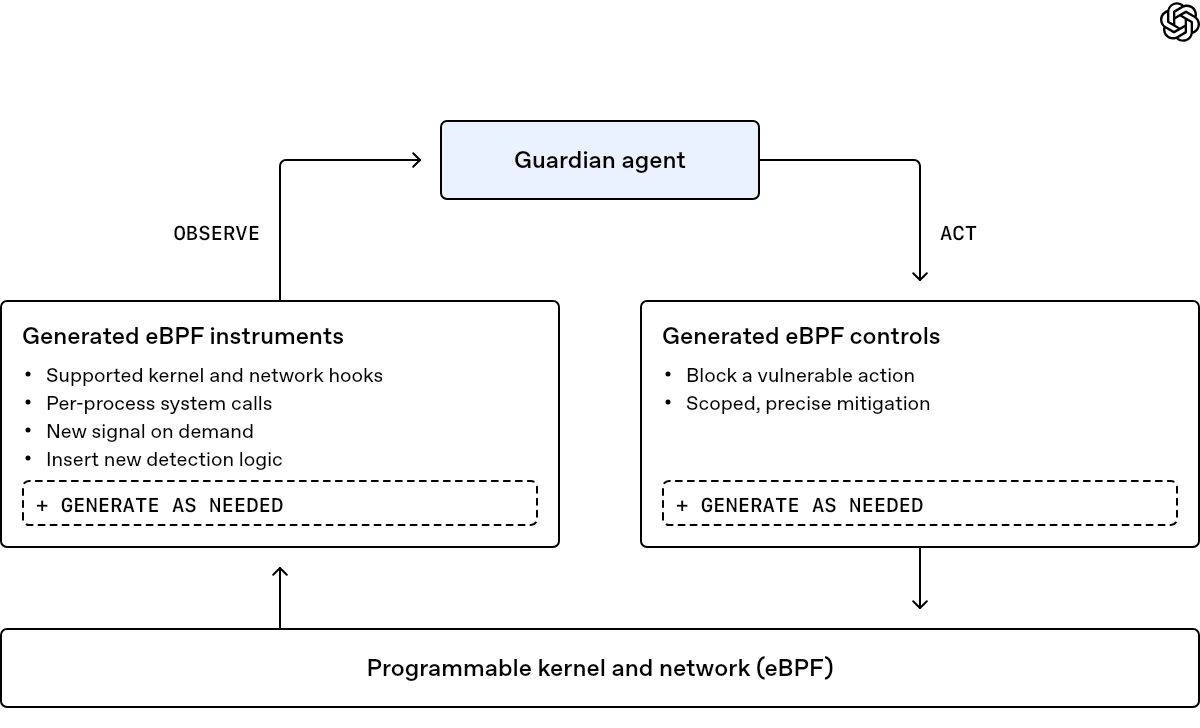
The problem it targets is the gap between a flaw becoming public and a fix reaching every server. Shirudo uses eBPF, a Linux feature that runs small, checked programs inside the kernel, to block only the behavior that exposes the flaw while normal requests still get through. The service keeps running and doesn't need a restart. In OpenAI's controlled test, a shield written by Codex blocked an exploit attempt against a running Elasticsearch service by adding an input check to Java's Base64 decoder.
Agents can investigate a vulnerability and build and test a shield, but security teams approve each deployment. Shields are cryptographically signed and checked by the kernel's eBPF verifier, and a TPM-backed log records when protections are loaded or removed. Shirudo can run in a monitoring mode first and enforce later, so a team can see what a shield would block before it blocks anything.
The work sits where Cisco already has depth: it owns Isovalent, the company behind the eBPF-based Cilium project, and Isovalent offers a self-guided Shirudo lab. "So many teams rely on the same software that it makes sense to build these tools in the open," OpenAI president Greg Brockman said.
The docs include a virtual machine quickstart for signing, loading and verifying a test shield. OpenAI and Cisco plan a technical webinar on December 15.