Key takeaways
- GPT Image 2.6 Sunburst ranks first on Artificial Analysis's text-to-image leaderboard with an Elo of 1266, against 1174 for Nano Banana 2.1 in eighth place, as of November 28, 2026.
- Google charges $0.0336 for a 1K Nano Banana 2.1 image, while Artificial Analysis prices GPT Image 2.6 at $210.72 per 1,000 images at its max quality setting.
- Both are free to try in their consumer apps with unpublished daily limits, and neither has a free tier for image output in its API.
Nano Banana vs GPT Image has a clear split as of November 28, 2026: OpenAI's GPT Image 2.6 models rank higher on independent leaderboards, and Google's Nano Banana 2.1 costs far less per image. On Artificial Analysis's text-to-image leaderboard, GPT Image 2.6 Sunburst is first and Nano Banana 2.1 is eighth. Artificial Analysis prices 1,000 square images at $210.72 from Sunburst at its top setting and $33.60 from Nano Banana 2.1.
This comparison is based on Google's and OpenAI's own docs, pricing and help pages, and on Artificial Analysis's published leaderboards, read on November 28, 2026. It is not a hands-on test.
What Nano Banana and GPT Image are
Nano Banana is Google's name for its Gemini image models. The newest is Nano Banana 2.1 (API name gemini-nano-banana-2.1), which Google's model card dates to October 6, 2026 and says is based on Gemini 3.6 Flash. The family also includes Nano Banana 2, Nano Banana 2 Lite and Nano Banana Pro. For how those differ, see Nano Banana 2.1 vs Pro.
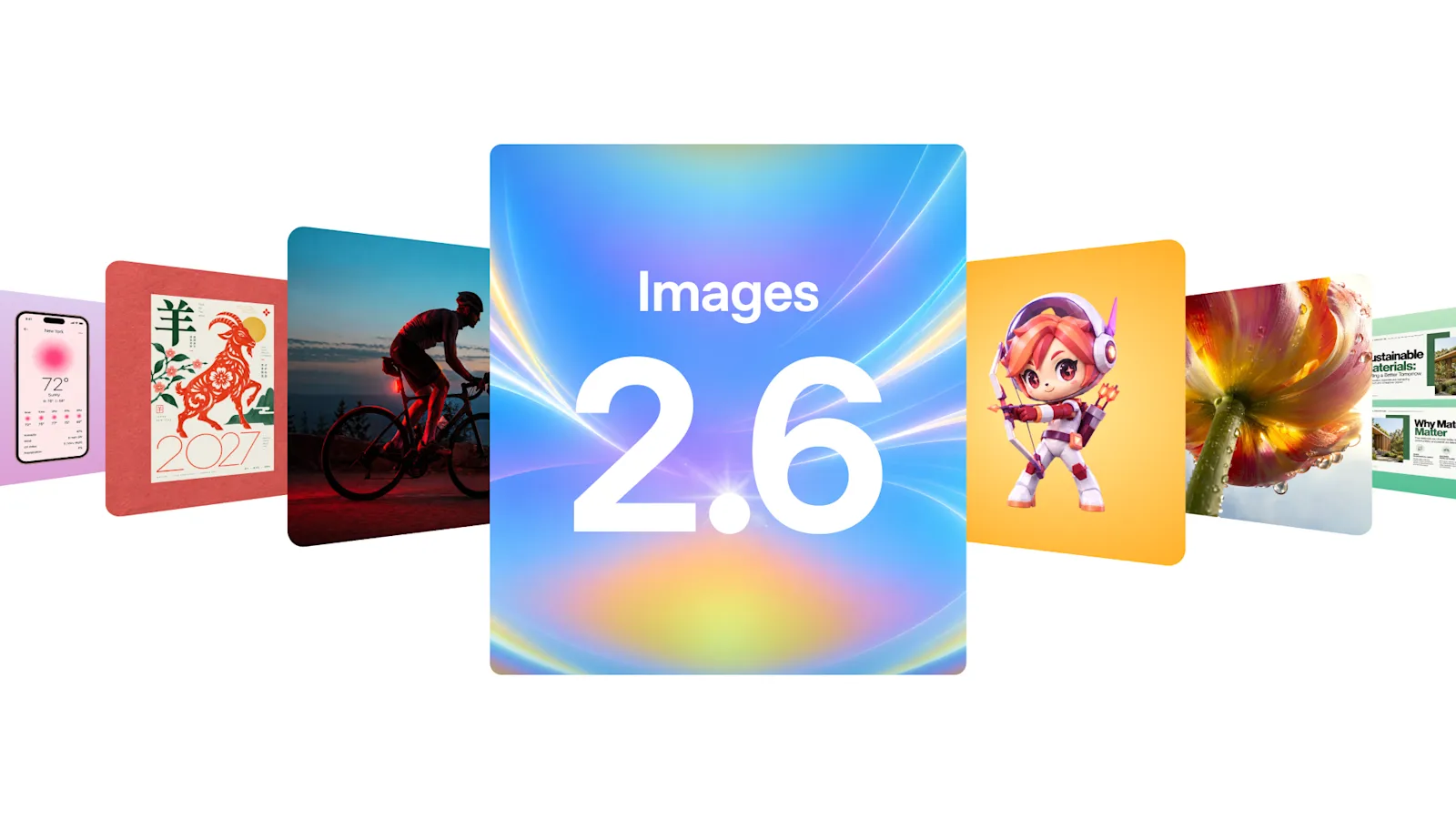
GPT Image is OpenAI's line of image models. OpenAI released Images 2.6 on November 4, 2026, as two API models: GPT-Image-2.6 Flare (gpt-image-2.6-flare), for fast iteration, and GPT-Image-2.6 Sunburst (gpt-image-2.6-sunburst), for detailed work and consistency across edits. The same model family powers ChatGPT Images 2.6 in ChatGPT and Codex. The 2.5 versions of Flare and Sunburst, from September 8, 2026, are still on OpenAI's model list.
Nano Banana vs GPT Image side by side
| Nano Banana 2.1 (Google) | GPT Image 2.6 Flare and Sunburst (OpenAI) | |
|---|---|---|
| Released | October 6, 2026 | November 4, 2026 |
| Consumer apps | Gemini app, Google Search AI Mode, Flow, Stitch, Google Ads | ChatGPT, Codex |
| Developer access | Gemini API, Google AI Studio | OpenAI API (Images API generation and edit endpoints) |
| Image output price | $30 per million tokens | $30 per million tokens |
| Price per image (official) | $0.0336 at 1K, $0.0504 at 2K, $0.113 at 4K | Not listed per image for 2.6 |
| Price per 1,000 images on Artificial Analysis | $33.60 | $210.72 (at "max" quality) |
| Batch discount | Half price ($0.0168 per 1K image) | Batch prices listed at half, but the 2.6 model pages list Batch as unsupported |
| Largest output | 4K | 3840 pixels on the long edge (4K) |
| Aspect ratios | Standard ratios plus 1:4, 4:1, 1:8 and 8:1 | Any size from 1:3 to 3:1 in steps of 16 pixels |
| Reference images | Up to 10 objects and 4 characters | Several per edit request (OpenAI's example uses four) |
| Special outputs | Text and image together, grounded with Google Search | Transparent PNG or WebP, SVG, animated GIF |
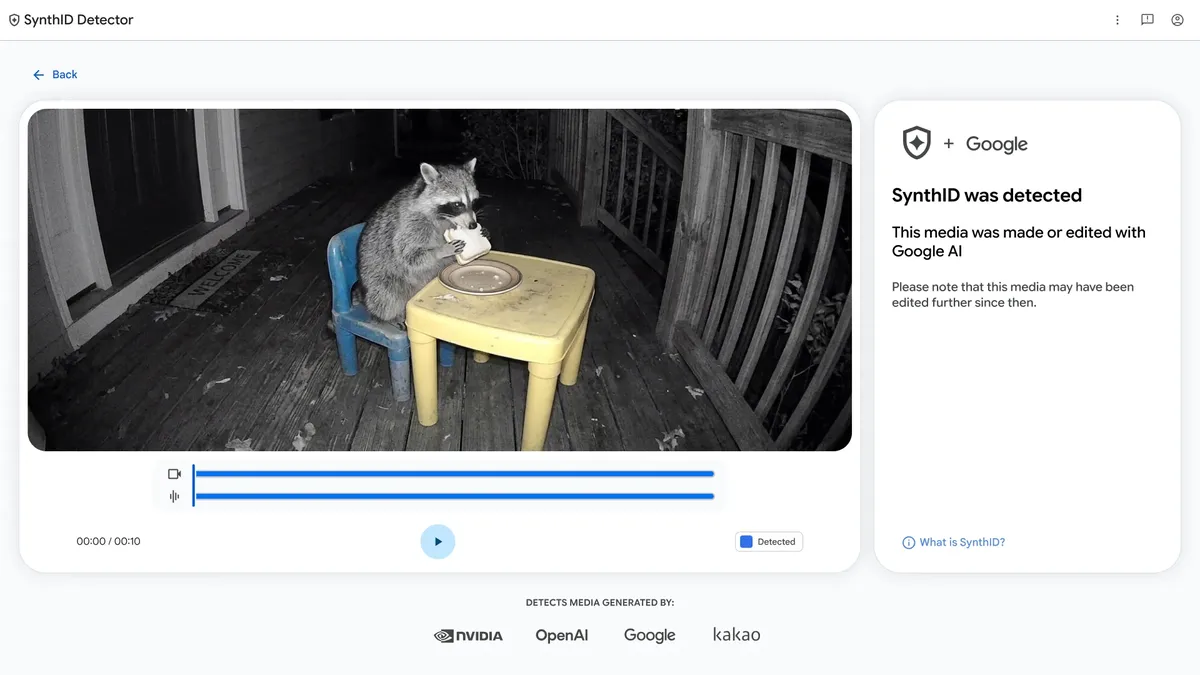
| Watermark | SynthID | SynthID and C2PA metadata |
| Free in the API | No | No free image allowance listed |
| Free in the consumer app | Yes, with a daily quota (Nano Banana 2) | Yes, "limited image creation" |
| Text-to-image rank (Artificial Analysis) | 8th, Elo 1174 | Sunburst 1st (1266), Flare 3rd (1227) |
| Image editing rank (Artificial Analysis) | 10th, Elo 1152 | Sunburst 2nd (1211), Flare 3rd (1204) |
Which one makes better images
On independent numbers, GPT Image. Artificial Analysis runs blind arenas: people see two images from the same prompt and pick the better one, and each win raises a model's Elo rating. As of November 28, 2026:
| Model | Text-to-image rank | Elo | Editing rank | Elo |
|---|---|---|---|---|
| GPT Image 2.6 Sunburst (max) | 1 | 1266 | 2 | 1211 |
| GPT Image 2.6 Flare (max) | 3 | 1227 | 3 | 1204 |
| GPT Image 2.5 Sunburst (max) | 2 | 1230 | 4 | 1201 |
| Nano Banana 2.1 | 8 | 1174 | 10 | 1152 |
| Nano Banana 2 | 13 | 1145 | 18 | 1126 |
| Nano Banana Pro | 19 | 1117 | 25 | 1112 |
OpenAI holds the top spots on the text-to-image board. On the image editing leaderboard, Microsoft's MAI-Image-2.7 is first at 1218, just ahead of Sunburst. Google's best entry, Nano Banana 2.1, trails Sunburst by 92 points on text-to-image and 59 on editing.
Two caveats. OpenAI's entries are listed at their "max" quality setting, the most expensive one, while Google's entries carry no setting label. And neither company publishes a head-to-head test against the other. Google's model card compares Nano Banana 2.1 only with its own earlier models, and OpenAI's launch post cites no benchmark at all.
Nano Banana vs GPT Image pricing
Both companies bill image output at the same rate: $30 per million image tokens, according to the Gemini API pricing page and OpenAI's API pricing. The difference is how many tokens one image uses.
Google publishes per-image prices. A Nano Banana 2.1 image costs $0.0336 at 1K (1024x1024), $0.0504 at 2K and $0.113 at 4K. The Batch API halves those prices, for jobs that can wait.
OpenAI does not list a per-image price for the 2.6 models. Its image generation guide points to a calculator instead, and bills by tokens: $5 per million text input tokens, $8 per million image input tokens and $30 per million image output tokens. Artificial Analysis lists $210.72 per 1,000 images for both Flare and Sunburst at max quality, or about $0.21 an image. Lower quality settings use fewer tokens. For the older GPT Image 2, where OpenAI does publish per-image prices, a 1024x1024 image costs $0.006 at low quality, $0.053 at medium and $0.211 at high.
So at the settings that top the leaderboards, a GPT Image 2.6 image costs about six times as much as a 1K Nano Banana 2.1 image. Nano Banana 2.1 also bills its thinking tokens as output at $7.50 per million, which adds to the bill when you set thinking to high.
One inconsistency: OpenAI's pricing page lists Batch prices for the 2.6 models at half the standard rate, but the 2.6 model pages list the Batch endpoint as not supported. Check before you plan a batch job around it.
Resolution and editing features
GPT Image 2.6 accepts custom sizes. Width and height must be multiples of 16, the ratio must fall between 1:3 and 3:1, and the long edge can reach 3840 pixels, so 3840x2160 is the largest wide size. Quality runs from low through medium, high, xhigh and max, and a separate complexity setting controls how much the model plans before it draws, at no extra fee. It can return transparent PNG or WebP images, SVG files and looping GIFs of 2 to 16 frames. For edits, you can pass a mask, which OpenAI says the model follows only approximately, or a markup layer: a transparent PNG with your scribbles showing where to change things. OpenAI says Flare can return a low-quality image in as little as six seconds, while complex prompts can take up to two minutes.
Nano Banana 2.1 outputs at 1K, 2K or 4K, and adds extreme ratios such as 1:8 and 8:1 for banners. Google's image generation docs allow up to 14 reference images, up to 10 of objects and 4 of characters. Editing is conversational: you ask for changes over several turns, which the docs call the recommended way to iterate. It can also take video as input and look things up with Google Search or Google Image Search before drawing, which helps with infographics about real places or current data. Thinking is always on, at a minimal, medium or high level.
Each side has gaps. Google's model card says small text can come out blurry at 1K and that mask edits sometimes only half follow instructions. OpenAI's guide says precise text placement, recurring characters and exact layouts can still be hard.
Where you can use each one
- Gemini app. Free users can make images with Nano Banana 2 up to a daily quota that Google doesn't put a number on. Google's Gemini image help page still names Nano Banana 2, not 2.1, as the model behind the Flash and Pro settings. Paid Google AI plans can redo an image with Nano Banana Pro.
- Other Google products. The model card lists the Gemini app, Google Search AI Mode, Google Ads, Flow and Stitch as places Nano Banana 2.1 ships.
- ChatGPT and Codex. OpenAI says Images 2.6 is available on all ChatGPT subscription tiers on web, desktop and mobile. ChatGPT's image help page adds saved reference photos (with memory on), GIFs and comments on specific spots of an image. "Images with thinking" is limited to Plus, Pro and Business.
- APIs. Nano Banana 2.1 runs in the Gemini API and Google AI Studio. GPT Image 2.6 runs through OpenAI's Images API, on the generation and edit endpoints. OpenAI says you may need to complete organization verification before using GPT Image models.
Free plan limits
Neither company publishes a daily image count for its free consumer plan.
ChatGPT's pricing page lists "Limited image creation" for Free, "More image creation" for Go and "Unlimited and faster image creation" for Pro. The Gemini app's limits page shows image generation with Nano Banana 2 for users without a plan and gives Google AI Plus two times, and Pro four times, the standard limits. Image requests count as high-cost usage.
In the APIs, nothing is free. Google's pricing page marks every Nano Banana model "Not available" on the free tier, and OpenAI's model pages list no free image allowance.
Which one to pick
For the best-looking images and the most output formats, GPT Image 2.6. Sunburst leads Artificial Analysis's text-to-image board and Flare is close behind, and only OpenAI offers SVG, transparent backgrounds and GIFs.
For volume, Nano Banana 2.1. At $0.0336 for a 1K image and half that in batch, it costs a fraction of GPT Image at top quality, and it adds search grounding and more reference images. Run your own prompts through both before you commit, since every score here comes from someone else's tests. For Google against a subscription tool, see Midjourney vs Nano Banana.
Frequently asked questions
Is Nano Banana better than GPT Image?
Not on independent leaderboards. As of November 28, 2026, GPT Image 2.6 Sunburst and Flare rank first and third on Artificial Analysis's text-to-image board, and Nano Banana 2.1 ranks eighth. Nano Banana 2.1 costs much less per image.
Is GPT Image 2.6 free?
In ChatGPT, OpenAI says Images 2.6 is available on all subscription tiers, and the Free plan gets limited image creation. In the API it is paid, at $30 per million image output tokens.
What is the difference between GPT Image 2.6 Sunburst and Flare?
OpenAI positions Flare for fast iteration and Sunburst for detailed work and consistency across edits. Both have the same token prices, and Sunburst ranks slightly higher on Artificial Analysis's leaderboards.
How much does Nano Banana cost per image?
In the Gemini API, a Nano Banana 2.1 image costs $0.0336 at 1K, $0.0504 at 2K and $0.113 at 4K, and half that through the Batch API, as of November 28, 2026.
Sources
- Introducing Images 2.6OpenAI
- Image generation guideOpenAI
- API pricingOpenAI
- GPT-Image-2.6 Sunburst model pageOpenAI
- GPT-Image-2.6 Flare model pageOpenAI
- Introducing ChatGPT Images 2.5OpenAI
- ChatGPT Images 2.6 system cardOpenAI
- Images in ChatGPTOpenAI
- ChatGPT pricingOpenAI
- Nano Banana 2.1 model cardGoogle DeepMind
- Gemini API pricingGoogle
- Image generation with GeminiGoogle
- Generate and edit images with Gemini AppsGoogle
- Gemini Apps limits and upgradesGoogle
- Text to image leaderboardArtificial Analysis
- Image editing leaderboardArtificial Analysis