Key takeaways
- Microsoft named six groups using ARTEX on November 25, among them Salt Typhoon, Crystal Typhoon and North Korea's Onyx Sleet and Pearl Sleet.
- ARTEX is an open-source multi-agent penetration testing tool published in July 2026; its author deleted it in October but forks remain.
- Microsoft says it adds no new techniques but speeds attacks up, with privileged access in under three hours in several Storm-0940 intrusions.
Microsoft says at least six hacking groups, including China's Salt Typhoon and two North Korean teams, have added ARTEX, an open-source AI penetration testing tool, to their kits. The company's threat intelligence team laid this out in a post on November 25 aimed at defenders. The groups it names are Storm-0940, Storm-3358, Onyx Sleet, Pearl Sleet, Crystal Typhoon and Salt Typhoon, a mix of state-sponsored and financially motivated actors.
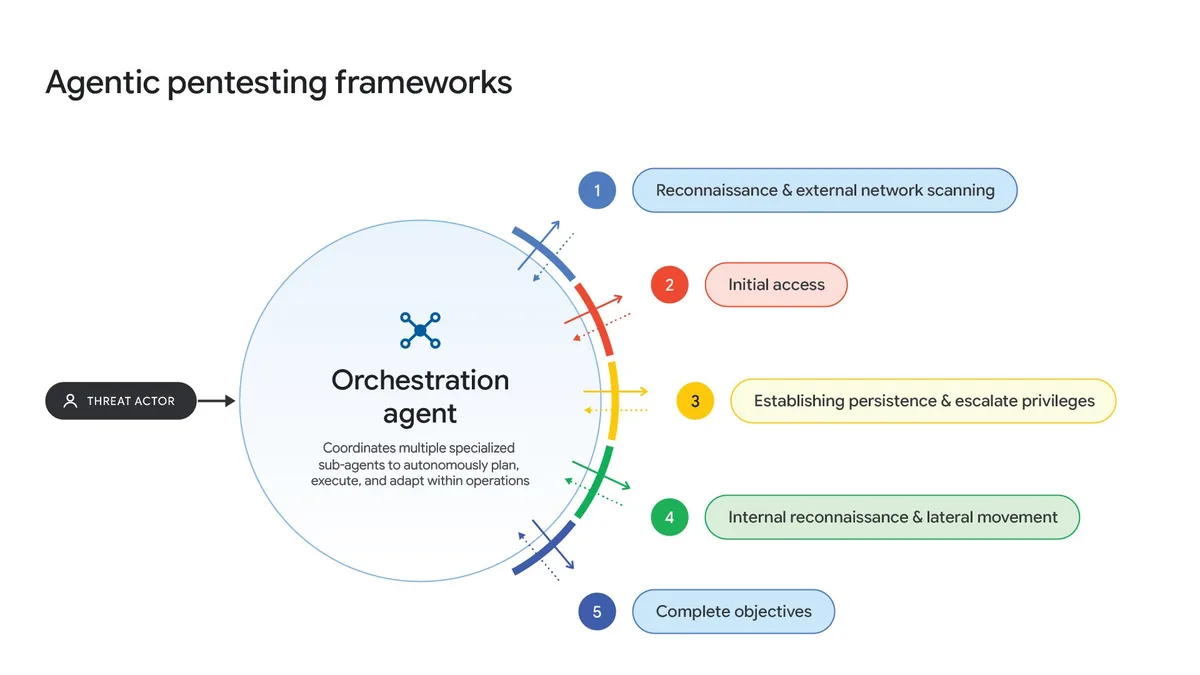
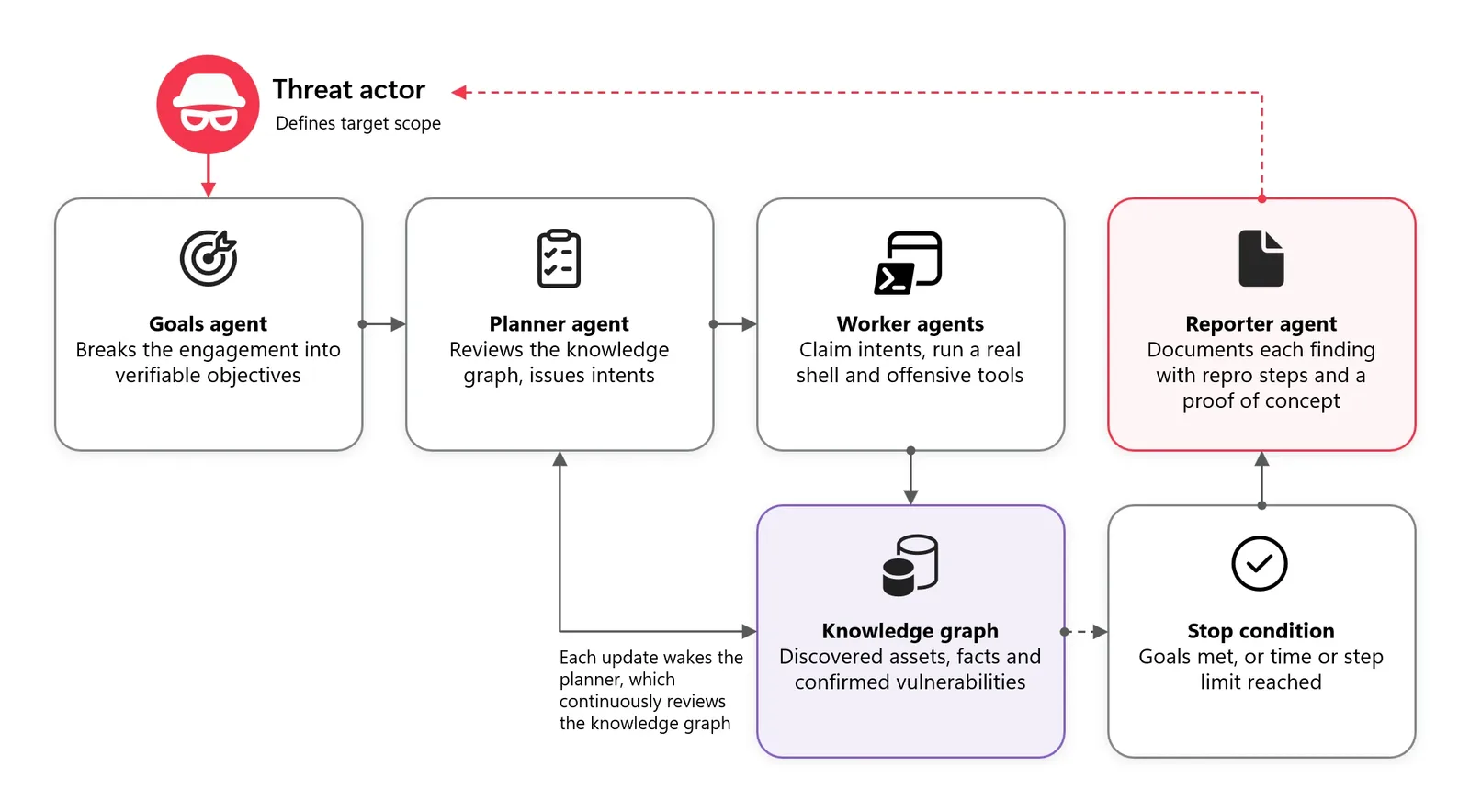
ARTEX was published on GitHub in July 2026 by a user called Autumn-27, with a Chinese-language interface. It runs a team of AI agents: one breaks a job into goals, another plans, workers run real shell commands and attack tools, and a reporter writes up each finding. It ships with 13 tools and can add 11 more. The author deleted the code in October, but forks keep circulating, and Microsoft says China-based ThreatBook now claims ownership and sells an "ARTEX Pro."
The tool matters because of speed, not new tricks. Microsoft writes that ARTEX "does not introduce new attack techniques"; it chains common ones at machine pace. In one case an agent went from searching GitHub for leaked secrets to pulling data from Azure Key Vault in five minutes. In several Storm-0940 intrusions, the attackers had privileged access less than three hours after they first targeted a victim, and one campaign logged more than 151,000 failed sign-ins, peaking at 2,900 a minute. Microsoft first tied Storm-0940 to ARTEX in an October post on a ConnectWise supply chain compromise.
For defenders, Microsoft's advice is the familiar list done faster: cut internet exposure, enforce phishing-resistant multifactor sign-in, remove secrets from code and rotate leaked ones, and watch behavior, because the tool's indicators change too quickly to block by signature. The post does not say what the four state groups other than Storm-0940 have done with ARTEX, only that they use it.
For background on agents that act on their own, see our explainer on agentic AI.
Sources
- What defenders need to know about ARTEX, the agentic AI framework threat actors abuseMicrosoft Threat Intelligence
- AI-driven, large-scale nation-state campaign using ARTEX enables supply chain compromiseMicrosoft Threat Intelligence