Key takeaways
- Kiro, from Amazon, builds each feature from a spec of requirements, design and tasks, while Claude Code, from Anthropic, works from a conversation in the terminal, IDE, desktop or web.
- Both start at $20 a month as of November 17, 2026: Kiro Pro buys 1,000 credits, and Claude Pro includes Claude Code with five-hour and weekly usage limits.
- Kiro offers Claude, GPT-5.6, Grok, Kimi and open-weight models plus a free tier of 50 credits, while Claude Code runs only Claude models and is not in Claude's Free plan.
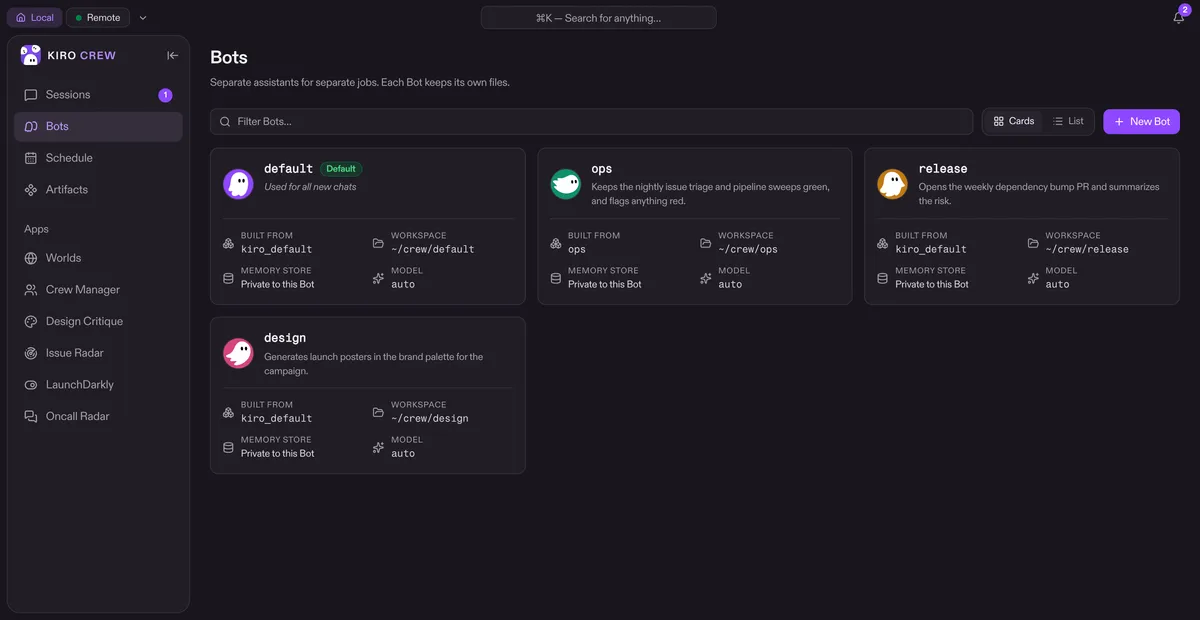
Kiro vs Claude Code comes down to how you want to work. Kiro is Amazon's agentic development environment: an IDE, a CLI, a web app and more, built around specs that turn a feature idea into requirements, a design and a task list before any code is written. Claude Code is Anthropic's coding agent: it starts in the terminal, reads your codebase, edits files and runs commands, and also runs in VS Code, JetBrains, a desktop app and the browser. Both start at $20 a month, as of November 17, 2026, but they meter use differently: Kiro sells credits, Claude Code shares usage limits with your Claude plan.
The other big difference is models: Kiro offers Claude, OpenAI's GPT-5.6 family, Grok, Kimi and open-weight models, while Claude Code runs Claude only.
This comparison is based on the products' docs and pricing pages, read on November 17, 2026. It is not a hands-on test.
Kiro vs Claude Code at a glance
| Kiro | Claude Code | |
|---|---|---|
| Made by | Amazon (licensed as AWS content) | Anthropic |
| Where it runs | IDE, CLI, Web, Mobile, Crew, ACP-compatible IDEs, CI/CD | Terminal, VS Code, JetBrains, desktop app, web, Claude mobile app, Slack, GitHub Actions, GitLab CI/CD |
| Core workflow | Specs: requirements, design, tasks; or "vibe" chat | Chat with plan mode, subagents, skills and scheduled tasks |
| Models | Claude (Opus 5.5, Sonnet 5.5, Haiku 5.5 and older), GPT-5.6 Sol, Terra and Luna, Grok 4.7, Kimi K3, GLM-5, MiniMax, DeepSeek, Qwen3 Coder Next, Auto | Claude only: Opus 5.5 by default, plus Sonnet, Haiku and Fable |
| Free plan | Yes: 50 credits a month | No: Claude Code is not in Claude's Free plan |
| Entry price | Pro, $20 a month for 1,000 credits | Claude Pro, $20 a month ($17 a month billed yearly) |
| Top individual plan | Power, $200 a month for 10,000 credits | Ultra, $200 a month, 10x Pro usage a week |
| Extra usage | Add-on credits at $0.04 each | Usage credits at standard API rates, or pay per token through the API |
| Project instructions | .kiro/steering/ files, plus AGENTS.md |
CLAUDE.md, or AGENTS.md in its place |
Prices are as of November 17, 2026, before tax.
How Kiro and Claude Code work
Kiro's signature idea is the spec. Its specs docs describe three files made in three phases: requirements.md with user stories and acceptance criteria (bugfix.md for a bug), design.md with architecture, data flow, error handling and a testing strategy, and tasks.md with a list of tasks to implement. Kiro groups the tasks into waves by their dependencies and runs the tasks within a wave at the same time. For small features, a Quick Spec writes all three files without stopping for approval.
Kiro adds two more pieces around the spec. Steering files in .kiro/steering/ hold the project's standards, and Kiro generates product.md, tech.md and structure.md for you. Hooks run a shell command or an agent prompt on events such as a file save, before or after a tool call, or when the agent stops. Kiro also supports the AGENTS.md standard.
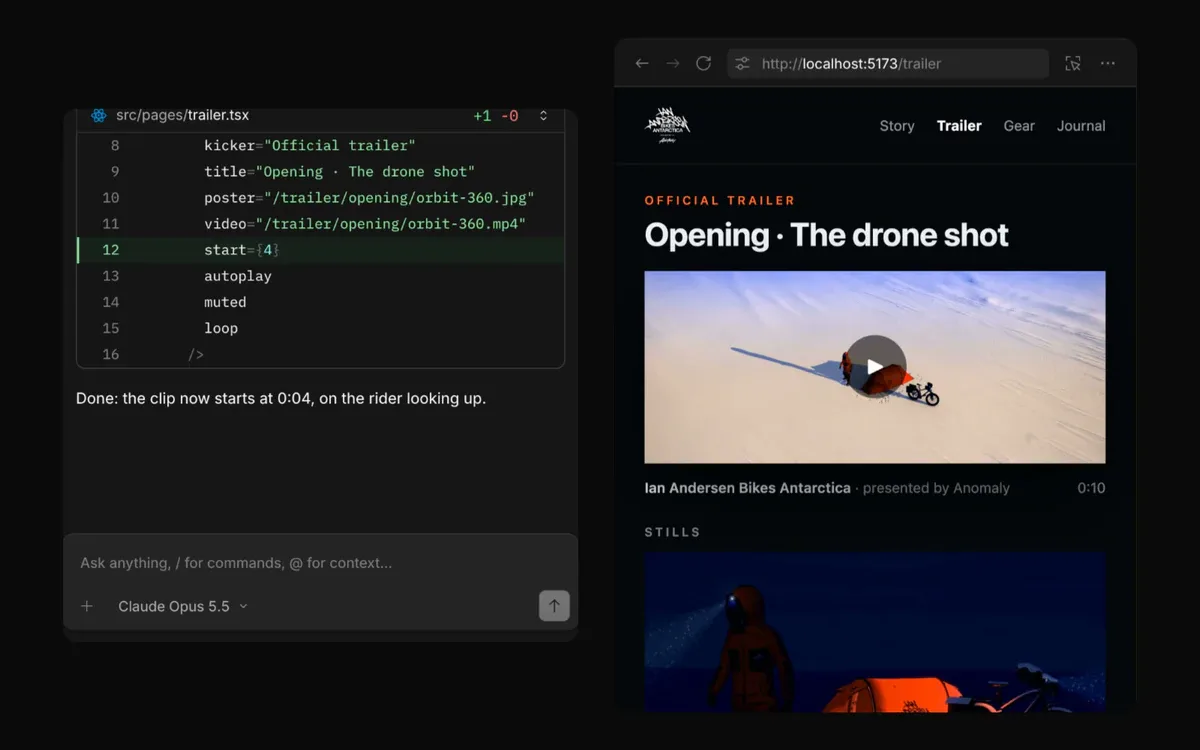
Claude Code starts from a conversation instead. You describe the task in plain language, and it plans, edits files across the repo and checks its work. Its customization looks like Kiro's: a CLAUDE.md file at the project root that it reads every session, hooks that run shell commands before or after its actions, skills that package repeatable workflows as slash commands, and MCP servers for outside tools. It can also spawn subagents to work on parts of a task in parallel, and run on a schedule in the cloud.
The practical difference: Kiro asks you to agree on a written plan before it writes code, and keeps that plan as files in the repo. Claude Code lets you skip straight to the change, with planning as one mode among others.
Where each one runs
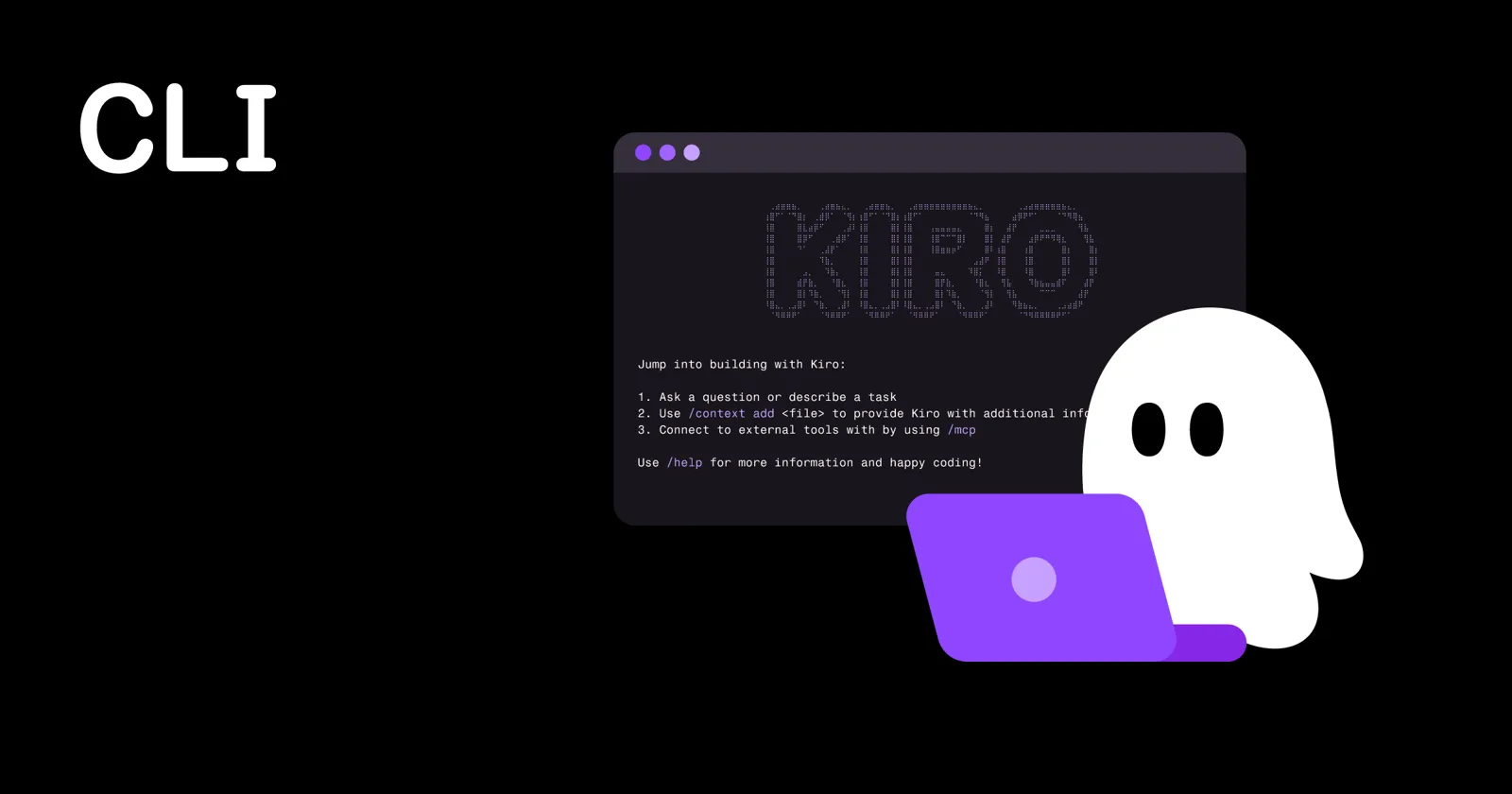
Kiro began as a desktop IDE. The Kiro CLI arrived with general availability on November 17, 2025, and one agent harness now runs the IDE, the CLI, Kiro Web and Mobile. The IDE runs on macOS, Windows 10 and 11, and several Linux distributions, and can import your VS Code settings and extensions during setup. The CLI has a headless mode for CI pipelines that signs in with an API key.
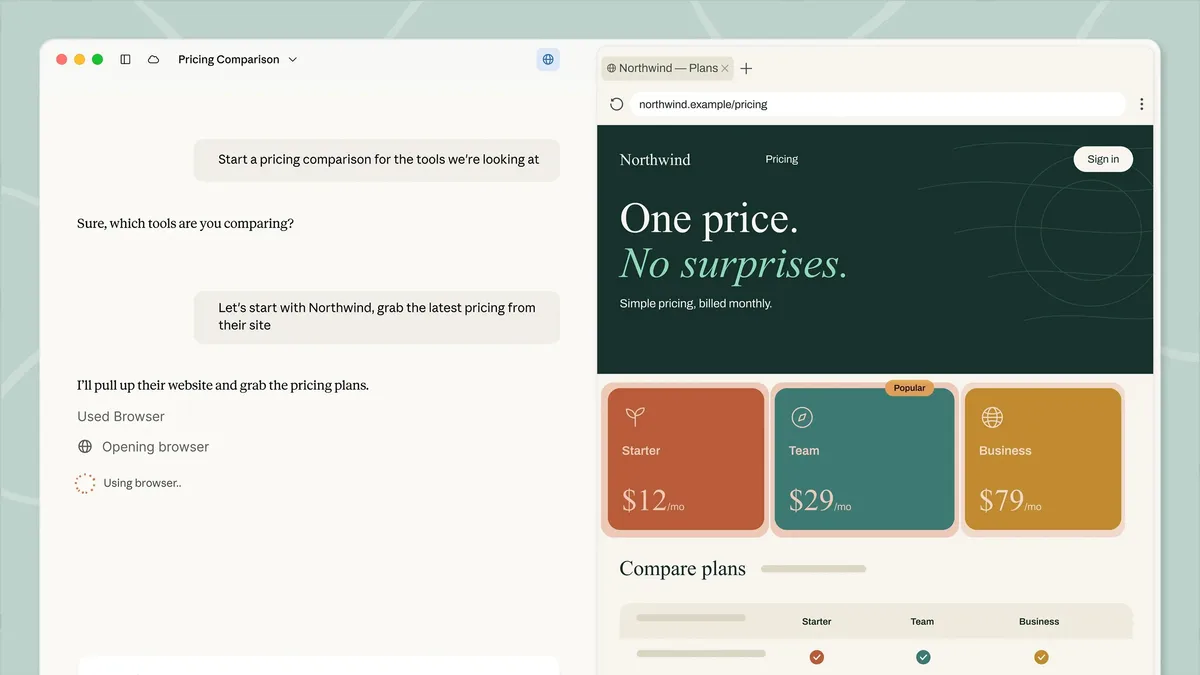
Claude Code began in the terminal and spread outward. The same engine runs in the CLI, a VS Code extension (which also installs in Cursor), a JetBrains plugin, the Claude desktop app, the web at claude.ai/code and the Claude mobile apps. It can take tasks from Slack, review pull requests in GitHub Actions or GitLab CI/CD, and read piped output from other commands.
Getting started takes one command for either CLI:
curl -fsSL https://cli.kiro.dev/install | bash   # Kiro CLI
kiro-cli

curl -fsSL https://claude.ai/install.sh | bash   # Claude Code
claude
Kiro signs in with GitHub, Google, AWS Builder ID, AWS IAM Identity Center or an external identity provider, according to its authentication docs. Claude Code signs in with a Claude account, an Anthropic Console account or an API key.
Kiro vs Claude Code pricing
Here is what each costs as of November 17, 2026, from Kiro's pricing page and Claude's pricing page.
| Monthly price | Kiro | Claude (includes Claude Code) |
|---|---|---|
| $0 | Free: 50 credits, open-weight models and Claude Sonnet 4.5 with limits | Free: no Claude Code |
| $20 | Pro: 1,000 credits | Pro: Claude Code included ($17 a month billed yearly) |
| $40 | Pro+: 2,000 credits | No plan at this price |
| $100 | Pro Max: 5,000 credits | Max: 5x Pro usage every 5 hours and every week |
| $200 | Power: 10,000 credits | Ultra: no 5-hour limit for verified accounts, 10x Pro usage a week |
| Teams | $20 per seat, 500 credits per seat in a shared pool | Team: $25 per standard seat ($20 billed yearly), $125 per premium seat ($100 billed yearly) |
Kiro counts credits. A credit is a unit of work. A simple prompt can cost less than one; running a spec task usually costs more. Every model has a multiplier: Claude Opus 5.5 runs at 2.0x, Sonnet 5.5 at 1.3x, Haiku 5.5 at 0.06x for prompts up to 100,000 tokens, and GPT-5.6 Sol at 4.4x, according to the models page. Unused credits don't roll over, and add-on credits cost $0.04 each, twice the Pro plan's rate of $20 for 1,000.
Claude Code counts usage windows. Paid Claude plans have a limit that resets every five hours and another every week. Anthropic does not publish them in tokens; it says how fast you reach a limit depends on the model, the length of the conversation and the size of the files. Max and Ultra also include a monthly API credit, $100 and $200, and both include Anthropic's Fable model for up to half of the weekly limit. Past the limit, paid plans can turn on usage credits billed at standard API rates. Developers can also skip the subscription and pay per token with an API key, or run Claude Code through Amazon Bedrock. Claude Code pricing explained covers those options in detail.
Kiro's credits make each task's cost visible in its dashboard. Claude's windows are harder to predict, but heavy use inside them doesn't add to the bill.
Models: one vendor against many
On Kiro's paid plans you can choose Claude Opus 5.5, Sonnet 5.5 and Haiku 5.5, all with a 1M-token context window, OpenAI's GPT-5.6 Sol, Terra and Luna, xAI's Grok 4.7 (marked experimental), Moonshot's Kimi K3 (US only), and cheap open-weight models such as GLM-5, MiniMax M2.5 and Qwen3 Coder Next. An Auto mode picks a model for you. Claude Fable 5.1 is available only to Kiro Enterprise organizations, at 6x credits.
Claude Code defaults to Opus 5.5 on every paid plan, according to its model configuration docs. You can switch to Sonnet, Haiku or Fable, or use opusplan, which plans with Opus and writes the code with Sonnet. It does not run OpenAI or other non-Claude models.
If you mostly want Claude, both give you the current Opus and Sonnet. Kiro wins if you want GPT or a cheap open model for some tasks.
AWS and enterprise
Kiro is Amazon's product. Its license page gives the IDE and CLI to users as "AWS Content" under the AWS Customer Agreement, and teams sign up through AWS IAM Identity Center and manage seats in the AWS Management Console. GovCloud (US) is available at about 20% above commercial prices.
Claude Code isn't tied to AWS but runs on it: its deployment docs list Amazon Bedrock and Claude Platform on AWS, with AWS billing, IAM policies and CloudTrail logs.
Which one to pick
Pick Kiro if you want a full editor with an agent in it, written requirements and designs for every feature, a free tier, or a mix of Claude, GPT and open-weight models.
Pick Claude Code if you live in the terminal, VS Code or JetBrains and don't want a new editor, want the agent in Slack, CI and on your phone, or already pay for Claude.
Both read AGENTS.md, both support hooks and MCP, and the Claude models inside Kiro are the same ones Claude Code runs.
People weighing Kiro against Claude Code often add OpenAI's Codex to the list. Its pricing page includes Codex in every ChatGPT plan, from Free at $0 and Go at $8 a month to Plus at $20 and Pro from $100, as of November 17, 2026. That puts all three at $20 for the usual entry plan, with Kiro and Codex also offering a free tier. For other matchups, see Claude Code vs OpenCode, Claude Code vs Codex and Claude Code vs Claude, which explains how the coding agent differs from the chat app.
Frequently asked questions
Is Kiro free?
Kiro has a free plan with 50 credits a month, open-weight models and Claude Sonnet 4.5 with limits, as of November 17, 2026. Paid plans run from Pro at $20 a month for 1,000 credits to Power at $200 for 10,000 credits.
Is Kiro owned by Amazon?
Yes. Kiro's license page names Amazon.com, Inc. or its affiliates as the owner, and licenses the IDE and CLI as AWS content under the AWS Customer Agreement.
Is Kiro open source?
No. Kiro is licensed under AWS terms, not an open-source license, though its license page lists open-source components it includes, such as Chromium and Bun.
How do Kiro, Claude Code and Codex compare on price?
All three have a $20-a-month entry plan: Kiro Pro, Claude Pro with Claude Code, and ChatGPT Plus with Codex. Kiro and Codex also have free plans, while Claude Code needs a paid Claude plan or an API key.
Sources
- Kiro pricingKiro (Amazon)
- Kiro documentationKiro (Amazon)
- Available modelsKiro (Amazon)
- SpecsKiro (Amazon)
- SteeringKiro (Amazon)
- HooksKiro (Amazon)
- Kiro CLIKiro (Amazon)
- InstallationKiro (Amazon)
- AuthenticationKiro (Amazon)
- LicenseKiro (Amazon)
- Kiro is generally available: Build with your team in the IDE and terminalKiro (Amazon)
- Claude Code overviewAnthropic
- Model configurationAnthropic
- Enterprise deployment overviewAnthropic
- Claude pricingAnthropic
- Codex pricingOpenAI