Key takeaways
- OpenAI released GPT-6.2 Astra and Sol on November 17 in ChatGPT Work, Codex and the API.
- Astra costs $8 per million input tokens and $40 per million output, 20% less than GPT-6 Astra; Sol stays at $2 and $10.
- OpenAI's system card rates Astra High for AI self-improvement, a first for a model it deploys externally, and both models Critical for cybersecurity.
OpenAI released GPT-6.2 Astra and GPT-6.2 Sol on Tuesday, November 17, in ChatGPT Work, Codex and the API. Astra, the flagship, costs $8 per million input tokens and $40 per million output tokens, 20% less than GPT-6 Astra. Sol keeps GPT-6.1 Sol's price of $2 and $10. Both read up to 1.05 million tokens, according to OpenAI's model docs.
The bigger news is in the GPT-6.2 system card. OpenAI rates Astra "High" for AI self-improvement under its Preparedness Framework, and calls it "the first model we are deploying externally" at that level. The category tracks how much a model can speed up AI research itself, including work on its own successors. Both models are rated "Critical" for cybersecurity, the top of the scale.
What GPT-6.2 Astra and Sol are for
OpenAI's API changelog pitches Astra for demanding reasoning and coding and Sol for everyday coding and agent work. Both take text and images and return text. Both work through the Responses API and Chat Completions, but tool calling needs the Responses API.
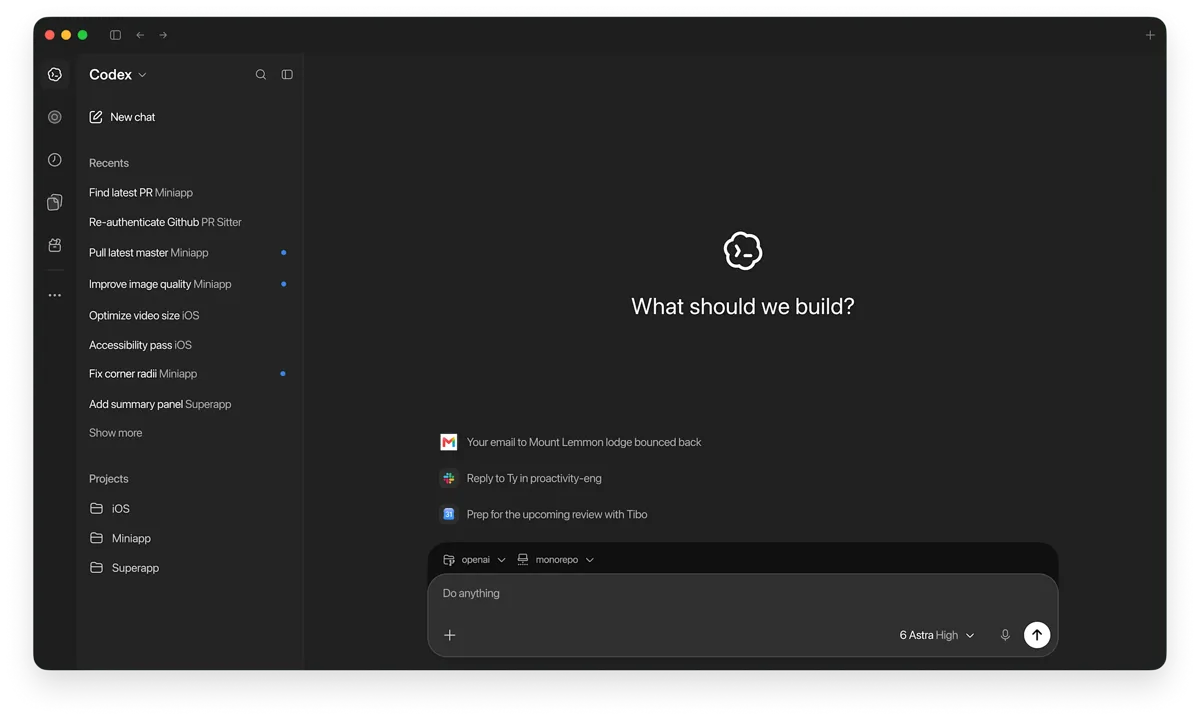
In ChatGPT, the models are available in ChatGPT Work and Codex on the Plus, Pro, Enterprise and Edu plans, 9to5Mac reported. OpenAI says both finish hard tasks with fewer output tokens, so the same plan gets more work done before it hits its usage limit. The $200-a-month Pro plan gets Ultrafast mode with Sol, and the $500 Pro plan gets it on both models. OpenAI says Ultrafast writes up to 4.5 times faster and uses more of the plan's allowance.
OpenAI's own coding claim is the one to watch for most developers. On Cognition's FrontierCode 2.0 test, which checks whether changes to real codebases are good enough to merge, Sol at maximum reasoning effort came within half a point of Astra at about one-fifth of the cost, OpenAI says. No independent scores were out at publication.
Price per million tokens
| GPT-6.2 Astra | GPT-6.2 Sol | |
|---|---|---|
| Input | $8 | $2 |
| Cached input | $0.40 | $0.10 |
| Output | $40 | $10 |
| Context window | 1,050,000 | 1,050,000 |
| Max output | 128,000 | 128,000 |
| Knowledge cutoff | May 18, 2026 | June 1, 2026 |
Prompts over 272,000 input tokens cost more: input doubles and output rises by half for the whole request. Batch jobs cost half. Fast mode costs twice the standard rate, and Ultrafast costs three times until February 28, 2027, then six times from March 1. OpenAI also opened a beta on November 17 that lets Responses API users wait two or eight hours for an answer in exchange for 30% or 40% off.
What the system card shows
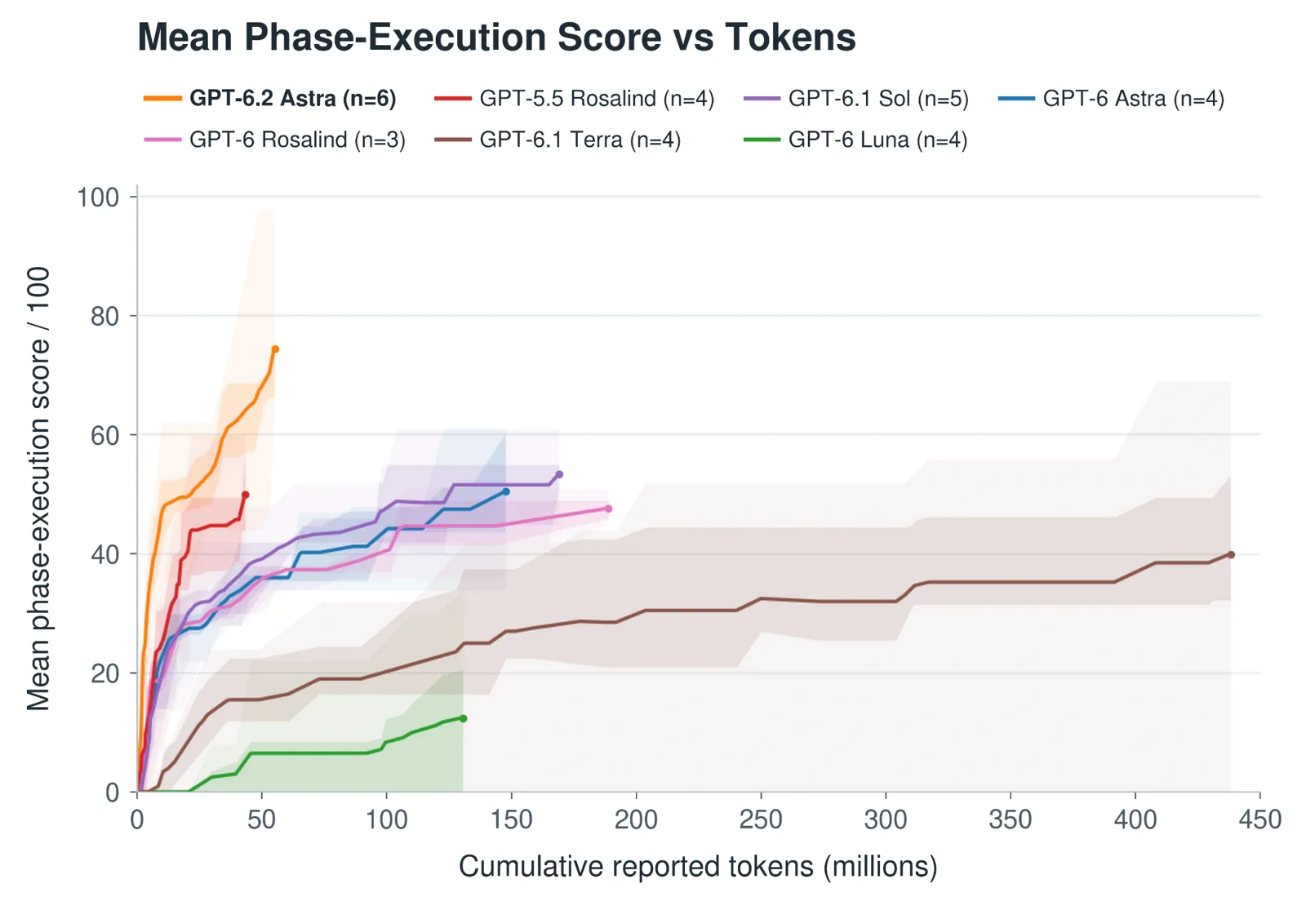
The self-improvement rating rests on OpenAI's internal tests. On a NanoGPT task, Astra cut 42.87% off the baseline training time, against 7.73% for GPT-6 Astra and 14.59% for Sol. On MLE-Bench, a set of machine-learning engineering contests, it reached the 96th percentile of reference solutions on average.
The cyber numbers jumped too. On an internal test that ports known V8 and Chrome bugs into working exploits, Astra got code execution 53.5% of the time and Sol 50.5%, up from 31.5% for GPT-6 Astra. OpenAI says it has tightened default limits on risky security help and requires extra vetting for more permissive access. The UK AI Security Institute found Astra "performs at the frontier on vulnerability discovery," solving 88.6% of its synthetic challenges against 81.7% for GPT-6 Astra, though the confidence ranges overlap.
This matters more than the price cut. Labs set these thresholds to decide when a model needs stronger safeguards before release. OpenAI crossing its own "High" line for self-improvement on a model anyone can pay for is a first, and the safeguards it describes lean heavily on monitoring: of internal Codex traffic, of training runs, and of outside use.
What to watch
Independent scores from groups like Artificial Analysis and LMArena should show within days whether Astra beats Anthropic's Claude Fable 5.2, the model 9to5Google framed GPT-6.2 as chasing. Developers moving from GPT-6.1 can follow OpenAI's migration guide; the main change is that tool calls need the Responses API.
Sources
- GPT-6.2 Astra model pageOpenAI
- GPT-6.2 Sol model pageOpenAI
- GPT-6.2 Astra and Sol system cardOpenAI
- API changelogOpenAI
- Introducing GPT-6.2 Astra and SolOpenAI
- OpenAI upgrades ChatGPT and Codex with new GPT-6.2 Astra and Sol models9to5Mac
- OpenAI releases GPT-6.2 Astra to regain performance lead from Claude Fable 5.29to5Google