Key takeaways
- GnuPG released GPGME 2.3.1 on November 19, 2026 to fix CVE-2026-129975, a double free in all earlier GPGME releases.
- A key with a crafted, very long user ID can trigger it; GnuPG says data theft is possible and code execution can't be ruled out.
- Gpg4win 5.1.2 and new GnuPG Desktop builds include the fix; statically linked programs must be rebuilt.
GnuPG released GPGME 2.3.1 on November 19, 2026 to fix a critical bug that a crafted OpenPGP key can trigger, and published the advisory on November 20. The flaw, CVE-2026-129975, affects every GPGME release before 2.3.0. GnuPG's Werner Koch wrote that an immediate update is "strongly recommended."
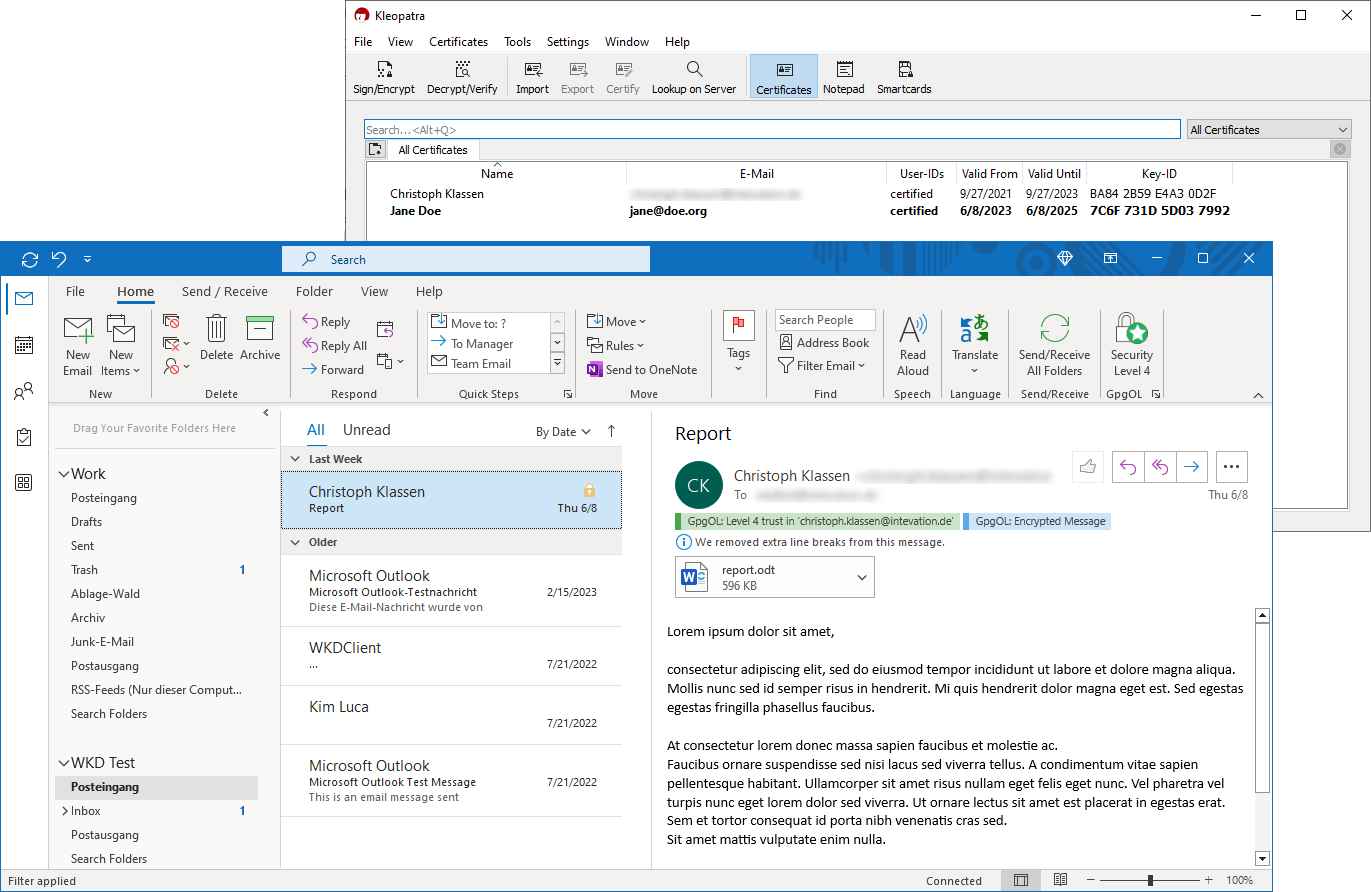
GPGME is the library other programs use to talk to GnuPG, so the bug reaches far beyond the gpg command. The advisory lists Gpg4win, GnuPG Desktop, most mail clients, many XMPP chat clients, Samba and Flatpak among the software that uses it. Importing or using a key with a very long, specially built user ID is enough to set it off.
The bug is a double free: GPGME can release the same block of memory twice. Two internal functions grow a buffer while reading output from gpg, but only record the new buffer at the end. If they stop early, for example on a read error, the old pointer stays behind and gets freed again later. According to the advisory, an attacker can use this to pull data out of an application, for example by getting it to send signed data, and remote code execution "cannot be ruled out." No CVSS score was given.
Johan Carlsson found the bug, and GitLab reported it to GnuPG on November 12. Disclosure was planned for November 25 but came early because GitLab had to ship an update for the separate Ruby2Shell flaw, which Cloudflare also wrote about on November 20.
What to do: update to GPGME 2.3.1, or apply the patch GnuPG attached, which it says should apply even to very old versions. Programs that link GPGME statically need to be rebuilt. Windows users get the fix in Gpg4win 5.1.2, and new GnuPG Desktop and VS-Desktop builds are out. The C++ and Qt bindings, GPGMEPP and GPGMEQT, don't need updates. Linux users should watch for patched packages from their distribution.