Key takeaways
- Databricks is a lakehouse that runs on files in your own cloud storage, while Snowflake is a managed platform that stores and runs everything for you.
- As of November 21, 2026, Azure Databricks Serverless SQL lists at $0.70 per DBU in East US, and a Snowflake Enterprise credit costs $3.00 on demand in AWS US East.
- Both now support Apache Iceberg tables and sell AI agents over company data: Genie and Agent Bricks on Databricks, Cortex and CoWork on Snowflake.
Databricks vs Snowflake comes down to where you start. Databricks is a lakehouse: it runs Spark, SQL and machine learning on files in your own cloud storage, stored as Delta Lake tables by default. Snowflake is a managed data platform, which it calls the Data Cloud: you load data into it and query it with SQL on warehouses Snowflake runs for you. Both now do most of what the other does, so the real differences are in pricing, defaults and who on your team will use it.
This comparison is based on the two companies' docs, pricing pages and published price lists, read on November 21, 2026. It doesn't rank speed. Both vendors publish their own performance claims, and results depend heavily on the workload.
Databricks vs Snowflake at a glance
| Databricks | Snowflake | |
|---|---|---|
| What it is | Lakehouse: a data lake and a warehouse in one system | Managed data platform with separate storage, compute and services layers |
| Default table format | Delta Lake, plus managed Apache Iceberg tables | Snowflake's internal columnar storage, plus Iceberg tables |
| Billing unit | DBU (Databricks Unit), per second | Credit, per second with a 60-second minimum |
| Example list rate | $0.70 per DBU, Serverless SQL, Azure Premium, East US | $3.00 per credit, Enterprise, AWS US East |
| Compute bill for classic clusters | DBUs plus the cloud VMs, billed separately | Credits only; Snowflake runs the machines |
| Storage | In your cloud account, billed by your cloud provider | $23 per TB per month on demand, AWS US East |
| Business-user AI | Genie Agents and Genie One | Snowflake CoWork, built on Cortex Agents |
| Developer AI | Agent Bricks, Model Serving, Genie Code | Cortex AI Functions, Cortex Agents, Cortex Code |
| Free option | Free Edition (personal use) and a 14-day trial | 30-day trial, AI features need a card |
| Company | Private | Public (NYSE: SNOW) |
Prices are list rates as of November 21, 2026. Committed-use contracts on both platforms cost less.
What each one is
Databricks defines a data lakehouse as "a data management system that combines the benefits of data lakes and data warehouses." In practice, your data sits as files in your own cloud storage on AWS, Azure or Google Cloud, and Databricks runs compute on top of it. Unity Catalog, its governance layer, controls who can see which tables, files, models and agents.
Snowflake's architecture docs describe three layers: storage, where Snowflake keeps data in a compressed columnar format; virtual warehouses, which are compute clusters that run your queries; and cloud services, which handle security, metadata and query planning. You don't manage servers or files.
How Databricks pricing works: DBUs
Databricks bills in DBUs, which its pricing page calls "a normalized unit of processing power." Each product has its own price per DBU, billed per second, and prices vary by cloud, region and tier. Pay as you go has no upfront cost; larger commitments get discounts.
Databricks' own rate tables load in the browser and didn't render for this comparison, so the example rates below come from Microsoft's Azure Databricks price list, for the Premium tier in East US, as of November 21, 2026:
| Azure Databricks workload (Premium, East US) | Price per DBU |
|---|---|
| Jobs Compute (classic) | $0.30 |
| All-Purpose Compute (classic) | $0.55 |
| SQL Pro Compute | $0.55 |
| Serverless SQL | $0.70 |
| Automated Serverless Compute | $0.45 |
| Interactive Serverless Compute | $0.95 |
| Model Training | $0.65 |
Two things change what you pay. First, on classic compute, Microsoft bills the virtual machines in your cluster on top of the DBUs, plus disks and storage. Serverless SQL is priced in DBUs alone. Second, bigger warehouses burn more DBUs per hour. A Serverless SQL warehouse uses 4 DBUs an hour at 2X-Small, 12 at Small, 24 at Medium and 528 at 4X-Large. A Small one at $0.70 per DBU works out to $8.40 an hour.
Microsoft says pre-purchasing DBUs saves up to 37% over pay-as-you-go prices.
How Snowflake pricing works: credits
Snowflake bills compute in credits. Its Service Consumption Table, effective November 20, 2026, sets how many credits each warehouse size uses per hour, and the dollar price of a credit.
A standard warehouse uses 1 credit an hour at X-Small, 2 at Small, 4 at Medium and 128 at 4X-Large. Billing is per second after a one-minute minimum each time a warehouse starts or resumes, and a suspended warehouse costs nothing. Gen 2 warehouses on AWS use 1.35 credits an hour at X-Small. Cloud services are free as long as they stay at or under 10% of the day's warehouse credits.
The price of a credit depends on the edition and the region. On demand, as of November 21, 2026:
| Snowflake on-demand credit price | Standard | Enterprise | Business Critical |
|---|---|---|---|
| AWS US East (N. Virginia) | $2.00 | $3.00 | $4.00 |
| Azure East US 2 | $2.00 | $3.00 | $4.00 |
| AWS EU Frankfurt | $2.60 | $3.90 | $5.20 |
At those rates, a Small warehouse on Enterprise in AWS US East costs $6 an hour. Storage costs $23 per TB per month on demand in AWS US East, measured after compression. Capacity contracts, paid upfront, apply a discount set in each customer's order form.
AI features use a separate unit, the AI Credit, priced at $2.00 on demand for global processing and $2.20 for regional.
Why the two price lists don't compare directly
A DBU and a credit are not the same amount of work. The $8.40-an-hour Databricks warehouse and the $6-an-hour Snowflake warehouse above are both called "Small," but nothing says they finish the same query in the same time. The only fair test is your own workload on both, for a week or two, using the free trials.
What you can compare is the shape of the bill. Snowflake folds machines and storage into one invoice. Databricks classic compute adds a second bill from your cloud provider; its serverless products don't.
AI features: Genie and Agent Bricks vs Cortex
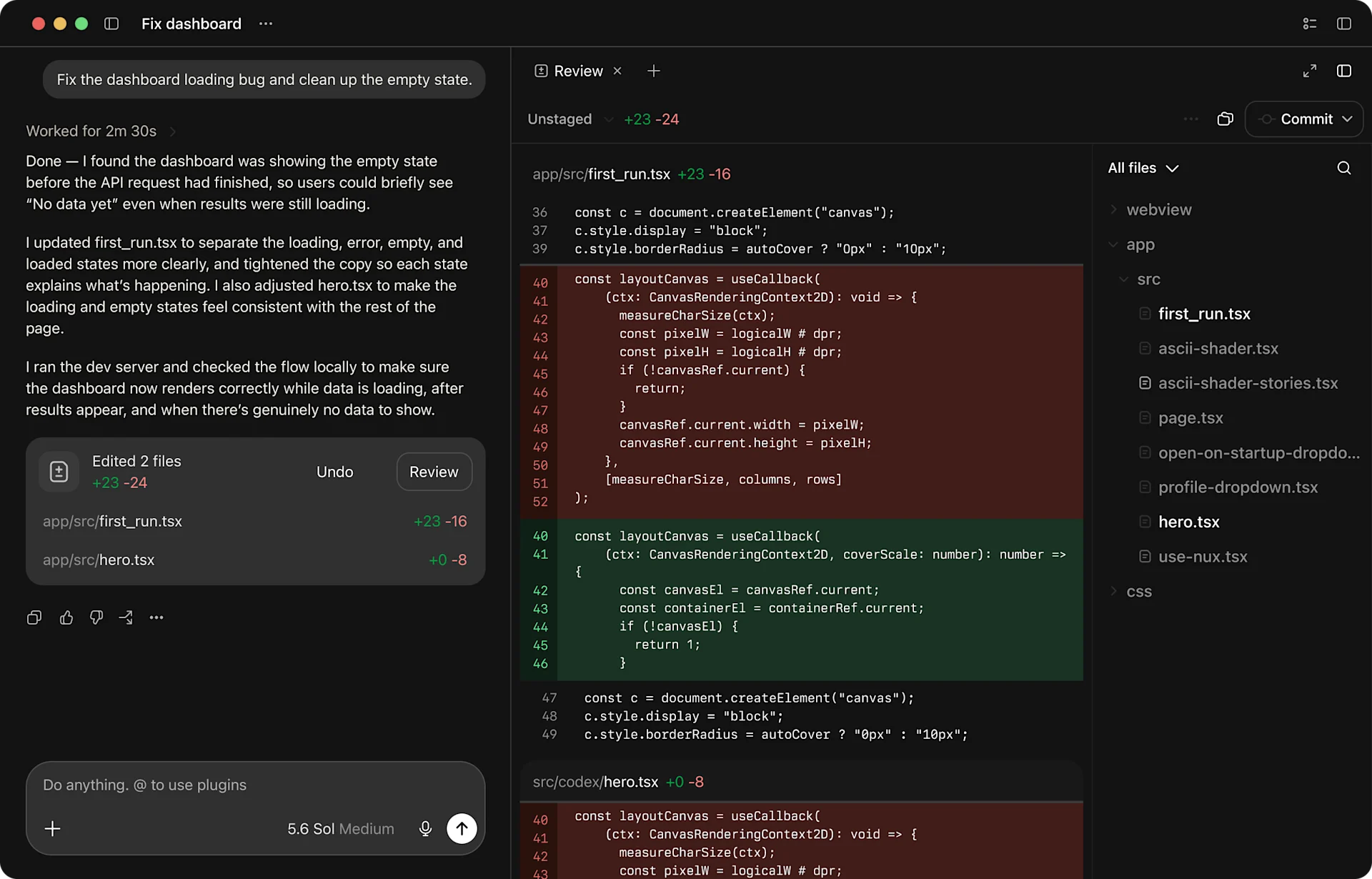
Databricks. Genie Agents, the new version of Genie Spaces, answer business questions in plain English over governed tables and files, and can act in tools like Jira and Slack through MCP connectors. Genie One is the assistant for every employee, and Genie Code builds and debugs Genie Agents. Genie bills at standard DBU rates; on Azure it includes 150 free DBUs a month and a promotional price through January 31, 2027. Agent Bricks is the platform for building custom agents, with models from OpenAI, Anthropic, Google, Meta and open-source providers, all governed in Unity Catalog. Model Serving hosts open models such as Llama on pay-per-token pricing and routes calls to OpenAI and Anthropic models. On November 19, Databricks also opened Genie ZeroOps, its pipeline-fixing agent, to all customers in public beta.
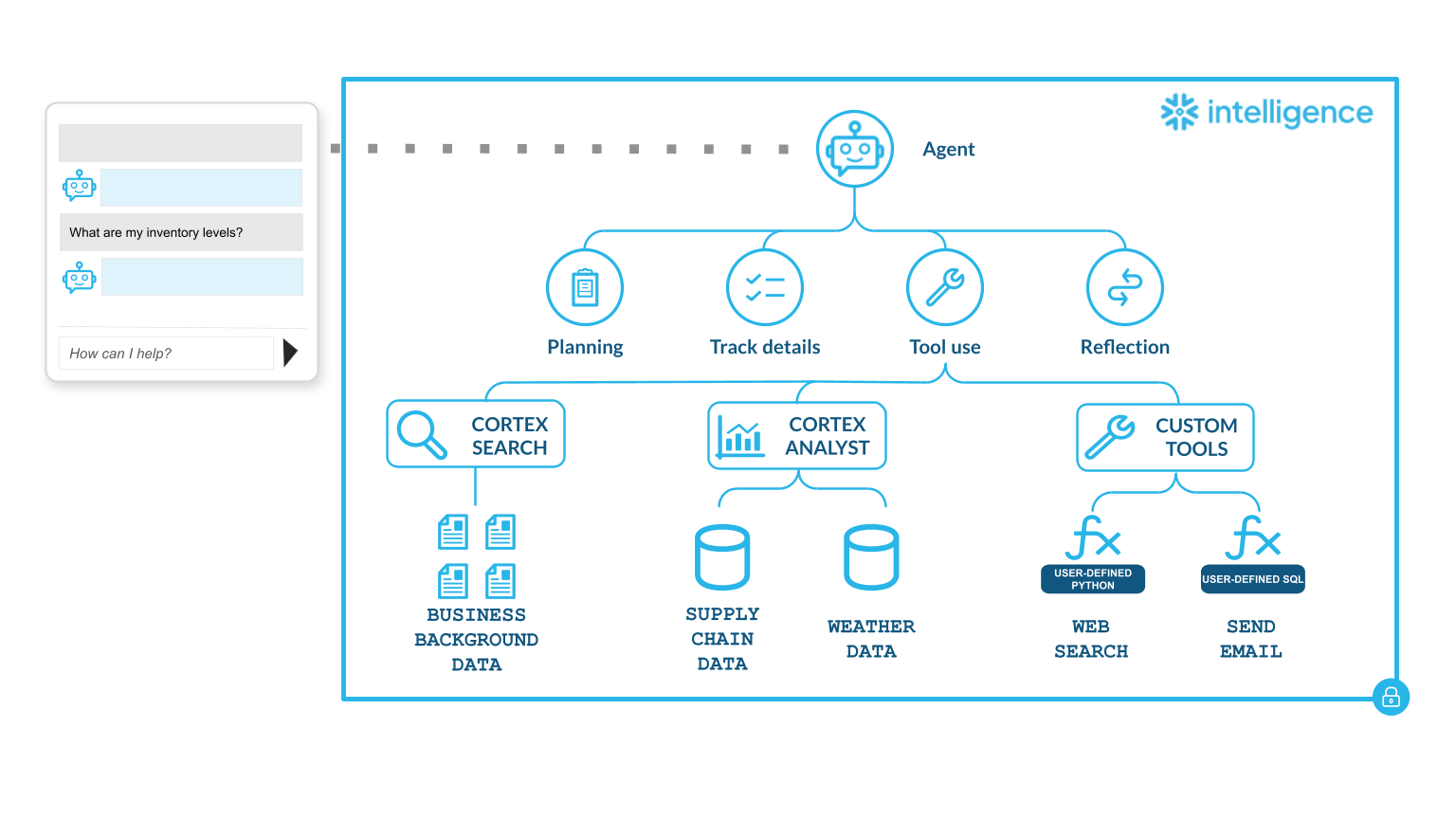
Snowflake. Cortex AI Functions put language models inside SQL: AI_COMPLETE, AI_CLASSIFY, AI_EXTRACT, AI_SUMMARIZE and others. Snowflake says the models, from OpenAI, Anthropic, Meta, Mistral AI, DeepSeek and xAI, run inside its service perimeter. Cortex Analyst turns questions into SQL, Cortex Search indexes documents, and Cortex Agents combine them. Snowflake CoWork is the ready-made chat app for business users, powered by the Cortex Agent API. Cortex Code is the coding assistant, in the Snowsight web interface and as a command-line tool. The price list sets Cortex Analyst at 67 platform credits per 1,000 messages through its API, and Cortex Search at 6.3 AI Credits per GB of indexed data per month.
The feature lists look alike. The difference is the starting point: Databricks builds agents on top of its machine learning platform, and Snowflake builds them on top of SQL.
Open formats: Delta Lake and Iceberg
Delta Lake is the default on Databricks: "all tables on Databricks are Delta Lake tables" unless you choose otherwise. Databricks also offers managed Iceberg tables in Unity Catalog, supporting Iceberg versions 1, 2 and 3, and an Iceberg REST catalog that lets outside engines read and write them. Iceberg tables managed by another catalog, including Snowflake's Horizon Catalog, are read-only in Databricks.
Snowflake supports Apache Iceberg tables with full read and write when Snowflake is the catalog, stored in Snowflake or in your own cloud storage. Other engines reach them through the Horizon Iceberg REST Catalog API, which supports Iceberg v3. Snowflake can also read Delta Lake tables written by Delta Lake 4.0.0 as Iceberg tables.
So either platform can share tables with the other through Iceberg. Each still works best with its own catalog in charge.
Who each one fits
Pick Databricks when your team writes Python and Spark, trains or serves its own models, and wants data to stay as open files in your own cloud account. It suits data engineering and data science groups that are comfortable tuning clusters, and companies that care most about avoiding lock-in.
Pick Snowflake when most of the work is SQL analytics, the people querying are analysts rather than engineers, and you want one bill with no clusters to manage. Per-second credits on a fixed size table are easier to forecast than DBUs plus cloud VMs.
Snowflake stock and the Databricks valuation
Snowflake is public. Its shares closed at $254.82 on November 20, 2026, down 5.1% from $268.59 the day before, according to Yahoo Finance. The company reports results for its fiscal third quarter on December 2, 2026.
Databricks is private. The Wall Street Journal reported on November 20 that it is in early talks to raise several billion dollars at a valuation of about $225 billion, according to a Reuters report on the Journal's story. That would be up from the $190 billion valuation Databricks announced with a $5 billion raise in August. The talks are early and the terms could change; our Databricks valuation explainer has the full history. Databricks did not immediately respond to Reuters' request for comment.
Frequently asked questions
Is Databricks cheaper than Snowflake?
There is no general answer, because a DBU and a credit measure different amounts of work. List prices put a Small Databricks Serverless SQL warehouse on Azure at $8.40 an hour and a Small Snowflake Enterprise warehouse on AWS at $6 an hour, but only a test on your own workload shows which finishes the job for less.
What is the difference between a DBU and a Snowflake credit?
A DBU is Databricks' unit of processing, priced per product and billed per second, with cloud VMs billed separately on classic compute. A Snowflake credit pays for warehouse time at a fixed rate per size, billed per second after a one-minute minimum, with the machines included.
Does Snowflake support Delta Lake?
Snowflake can read Delta Lake tables written by Delta Lake 4.0.0 by creating Iceberg tables from the Delta files. Its own open format is Apache Iceberg, which it supports with full read and write.
Is there a free version of Databricks or Snowflake?
Databricks Free Edition is free with no end date for personal, non-commercial use. Snowflake offers a 30-day trial that ends early if the free balance runs out.
Sources
- Databricks pricingDatabricks
- Azure Databricks pricingMicrosoft
- Azure retail prices API: Azure Databricks, East USMicrosoft
- Snowflake Service Consumption TableSnowflake
- Understanding Snowflake pricingSnowflake
- Understanding compute costSnowflake
- What is a data lakehouse?Databricks
- Key concepts and architectureSnowflake
- What is Delta Lake?Databricks
- Apache Iceberg in DatabricksDatabricks
- Apache Iceberg tablesSnowflake
- GenieDatabricks
- Agent BricksDatabricks
- Model ServingDatabricks
- Snowflake Cortex AI FunctionsSnowflake
- Overview of Snowflake CoWorkSnowflake
- AI and ML features overviewSnowflake
- Databricks Free EditionDatabricks
- Trial accountsSnowflake
- SQL warehouse sizing, scaling, and queuing behaviorMicrosoft
- Snowflake Inc. (SNOW) quoteYahoo Finance
- Snowflake to Announce Financial Results for the Third Quarter of Fiscal 2027 on December 2, 2026Snowflake via Business Wire
- Databricks in early talks to raise funds at $225 billion valuation, WSJ reportsReuters