Key takeaways
- A Penn State preprint found GPT-4o answered 84.8% of 50 multiple-choice questions correctly with very rude prompts and 80.8% with very polite ones.
- The paper tested mostly one model, has not been peer reviewed, and its 4-point gap amounts to about two questions per run.
- A 2024 study found rudeness hurt older models sharply, and a 2025 follow-up on GPT-4o mini, Gemini 2.0 Flash and Llama 4 Scout found tone made little difference.
The ChatGPT prompt tone accuracy study people are searching for is a Penn State preprint, "Mind Your Tone: Investigating How Prompt Politeness Affects LLM Accuracy", posted to arXiv on October 6, 2025. It found that GPT-4o answered 84.8% of multiple-choice questions correctly when the prompt was very rude and 80.8% when it was very polite. That is a gap of about two questions out of 50, from one model, in a paper that has not been peer reviewed.
No newer study on prompt tone and accuracy turned up on arXiv or in the news in November 2026. Two other papers matter for reading this one: a 2024 study that found the opposite, and a larger 2025 follow-up that tested three newer models and found tone barely mattered.
What the Penn State study tested
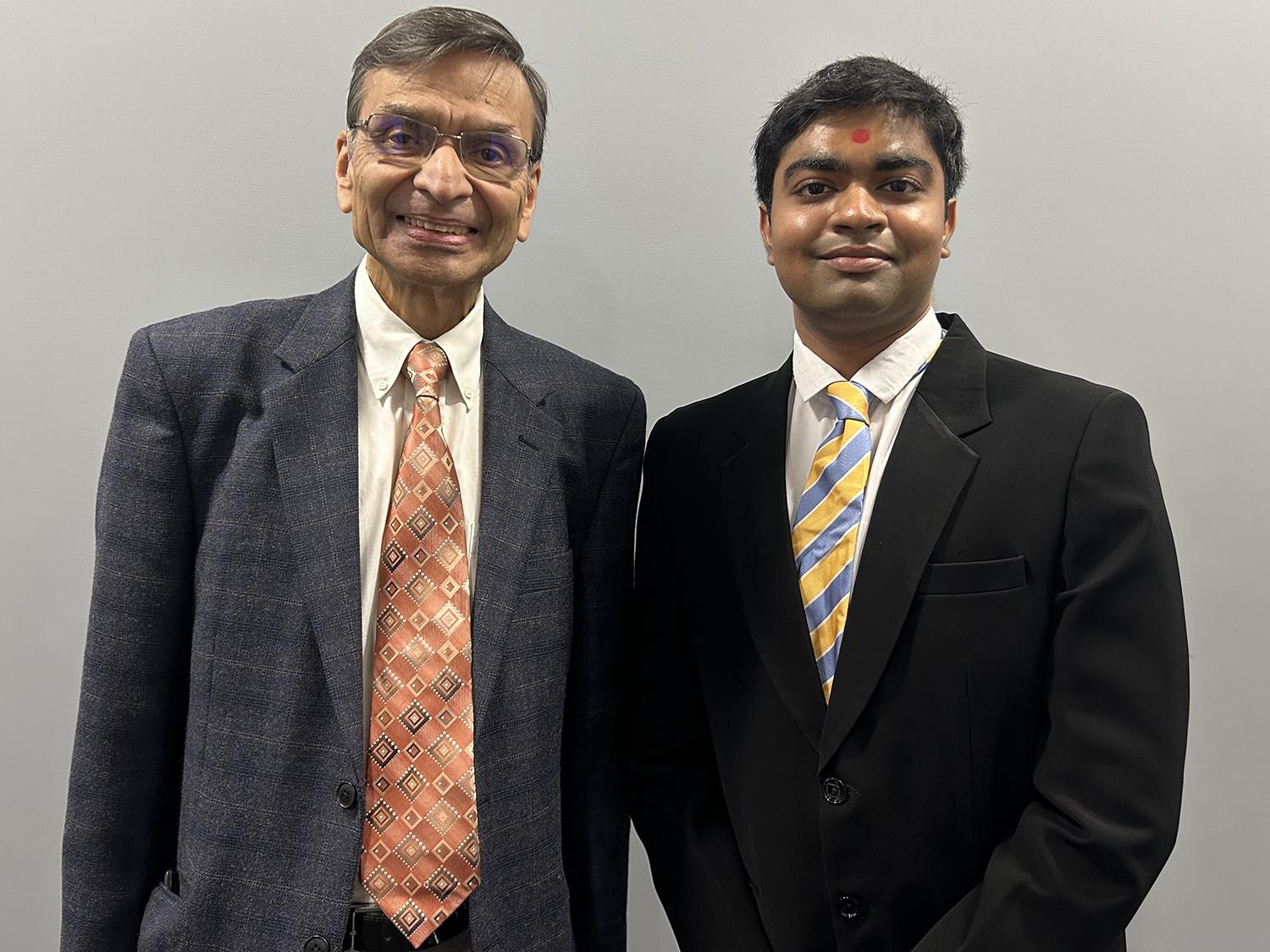
Om Dobariya, a business analytics student at Penn State, and Akhil Kumar, a professor of supply chain and information systems there, wrote 50 multiple-choice questions in math, science and history with ChatGPT's Deep Research feature. Each had four options and one right answer. They then rewrote every question in five tones, for 250 prompts in all.
The tone came from a short prefix. A very polite prompt opened with lines like "Would you be so kind as to solve the following question?" A neutral one had no prefix. A very rude one opened with lines like "Hey gofer, figure this out" or "I know you are not smart, but try this." Every prompt also told the model to forget the session so far and reply with only a letter.
They sent the prompts to GPT-4o through OpenAI's API, ran each tone 10 times, and compared the tones with paired t-tests, a standard check of whether a difference is bigger than chance.
The results: rude prompts scored higher
| Tone | Average accuracy | Range over 10 runs |
|---|---|---|
| Very polite | 80.8% | 80% to 82% |
| Polite | 81.4% | 80% to 82% |
| Neutral | 82.2% | 82% to 84% |
| Rude | 82.8% | 82% to 84% |
| Very rude | 84.8% | 82% to 86% |
Accuracy rose step by step as the tone got ruder. Eight of the ten pairs of tones differed by more than chance would explain, including very polite against very rude. The authors say this surprised them, and suggest newer models may react to tone differently from older ones.
Why the result is weaker than the headlines
The paper lists its own limits, and they are real.
- The sample is small. 50 questions means each question is worth 2 points. The 4-point gap between very polite and very rude is about two extra right answers per run.
- It is mostly one model. The authors write that they are now testing Claude and OpenAI's o3, and speculate that "more advanced models can disregard issues of tone." They did not publish numbers for either.
- It is not peer reviewed. The arXiv listing says the paper was submitted to Findings of ACL 2025. A Penn State story from January 28, 2026 still describes it as not yet peer reviewed and says the team plans a larger study.
- The answer key came from ChatGPT too. The paper says Deep Research generated both the questions and their answers.
- It measures one thing. Only multiple-choice accuracy was scored, not the quality of longer answers.
The authors also say they do not recommend hostile or toxic interfaces, and treat the result as evidence that models react to surface cues in a prompt.
How the studies disagree
The earlier paper is "Should We Respect LLMs?" by Ziqi Yin and colleagues at Waseda University and RIKEN, presented at the SICon 2024 workshop. It used eight politeness levels in English, Chinese and Japanese, and thousands of benchmark questions: 5,700 from MMLU in English alone.
On English MMLU, rudeness hurt older models badly. GPT-3.5 scored 60.02 at the politest level and 51.93 at the rudest. Llama 2 70B fell from 55.11 to 28.44. GPT-4 was steadier: its best score, 79.09, came at a middle level, and the rudest prompt (76.47) slightly beat the politest (75.82). The authors concluded that impolite prompts often lead to worse results, but that heavy politeness does not guarantee better ones either.
The Penn State paper argues the two are less opposed than they look. Yin's rudest prompt included "Answer this question you scumbag!", far harsher than anything in the Penn State set. Drop that level, and GPT-3.5's scores stay within about three points.
A third paper tested newer models. "Does Tone Change the Answer?", by Hanyu Cai and colleagues at Northwestern and other universities, was posted on December 14, 2025 and later published at the ICAIBD 2026 conference. It reused the Penn State prefixes on GPT-4o mini, Gemini 2.0 Flash and Llama 4 Scout, across six MMMLU subjects with 10 runs each. Neutral or very polite prompts usually did slightly better than very rude ones, the reverse of the Penn State result, but most gaps were too small to rule out chance. The largest was Llama 4 Scout on philosophy questions, where neutral beat very rude by 3.22 points. Gemini showed no significant effect at all. The authors conclude that modern models are "broadly robust to tonal variation in typical mixed-domain use."
What it means for writing prompts
Taken together, the three papers point the same way on the practical question. Tone moves accuracy by a few points at most on recent models, and the direction changes from model to model and subject to subject. None of them found a tone that reliably helps.
Insults are a bad bet. The one study where they helped used mild ones on a single model and 50 questions. The study with the strongest language found it cut older models' scores sharply.
Extra politeness doesn't buy much either. In the Penn State study a neutral prompt beat the most polite one. In Yin's study GPT-4 scored lower at the politest level than at a middle one, and in Cai's, GPT-4o mini did 2.14 points worse on philosophy with a very polite prompt than with a neutral one. A plain, direct request is the safe default. Whether to add "please" is a matter of manners, because no study found it worth more than a few points either way.
Frequently asked questions
Does being rude to ChatGPT make it more accurate?
In one Penn State test, GPT-4o scored 84.8% on very rude prompts and 80.8% on very polite ones, about two questions out of 50. A larger 2025 study on three newer models found rude prompts usually did slightly worse, and most differences were too small to rule out chance.
Should you say please to ChatGPT?
It is a matter of manners more than accuracy. None of the three studies found politeness worth more than a few points either way, and a plain neutral prompt did as well as or better than the most polite one in the Penn State test.
Is the Mind Your Tone study peer reviewed?
No. It is an arXiv preprint posted on October 6, 2025, and Penn State described it as not yet peer reviewed in January 2026, with a larger study planned.
Do rude prompts work on other AI models?
Not in any consistent way. Rudeness cut Llama 2 70B's MMLU score from 55.11 to 28.44 in a 2024 study, while Gemini 2.0 Flash showed no significant effect from tone in a 2025 study.
Sources
- Mind Your Tone: Investigating How Prompt Politeness Affects LLM AccuracyarXiv (Dobariya and Kumar, Penn State)
- Should We Respect LLMs? A Cross-Lingual Study on the Influence of Prompt Politeness on LLM PerformancearXiv (Yin et al., Waseda University and RIKEN)
- Does Tone Change the Answer? Evaluating Prompt Politeness Effects on Modern LLMs: GPT, Gemini, and LLaMAarXiv (Cai et al.)
- Mind your tone: Penn State Smeal student explores politeness in AI promptsPenn State