Key takeaways
- Lovable builds full-stack web apps from plain-English prompts, with a Supabase-based backend, two-way GitHub sync and free publishing to a lovable.app URL.
- As of November 14, 2026, the free plan gives 5 build credits a day (up to 30 a month), and Pro starts at $25 a month for 100 credits.
- Crissy Field and Handelsblatt found 24,664 Lovable-built sites sending database records without a login, including passport details and more than 200,000 chat messages.
The short answer to what is Lovable: it is an AI app builder. You describe a web app in plain English, and it writes the code, sets up a database, sign-in and file storage, and publishes the result at a live URL. It has a free plan, paid plans from $25 a month, and a fresh security question over the apps people build with it.
That question comes from a research post by Crissy Field, a Hamburg firm working with the German newspaper Handelsblatt, which found thousands of Lovable-built sites handing out database records to anyone who loads the page. It reached the Hacker News front page on November 14 with more than 500 points.
What Lovable is
Lovable's documentation calls it "a full-stack AI development platform for building, iterating on, and deploying web applications using natural language." It is made by a Swedish startup founded in Stockholm in 2023 by Anton Osika and Fabian Hedin, according to the Crissy Field post.
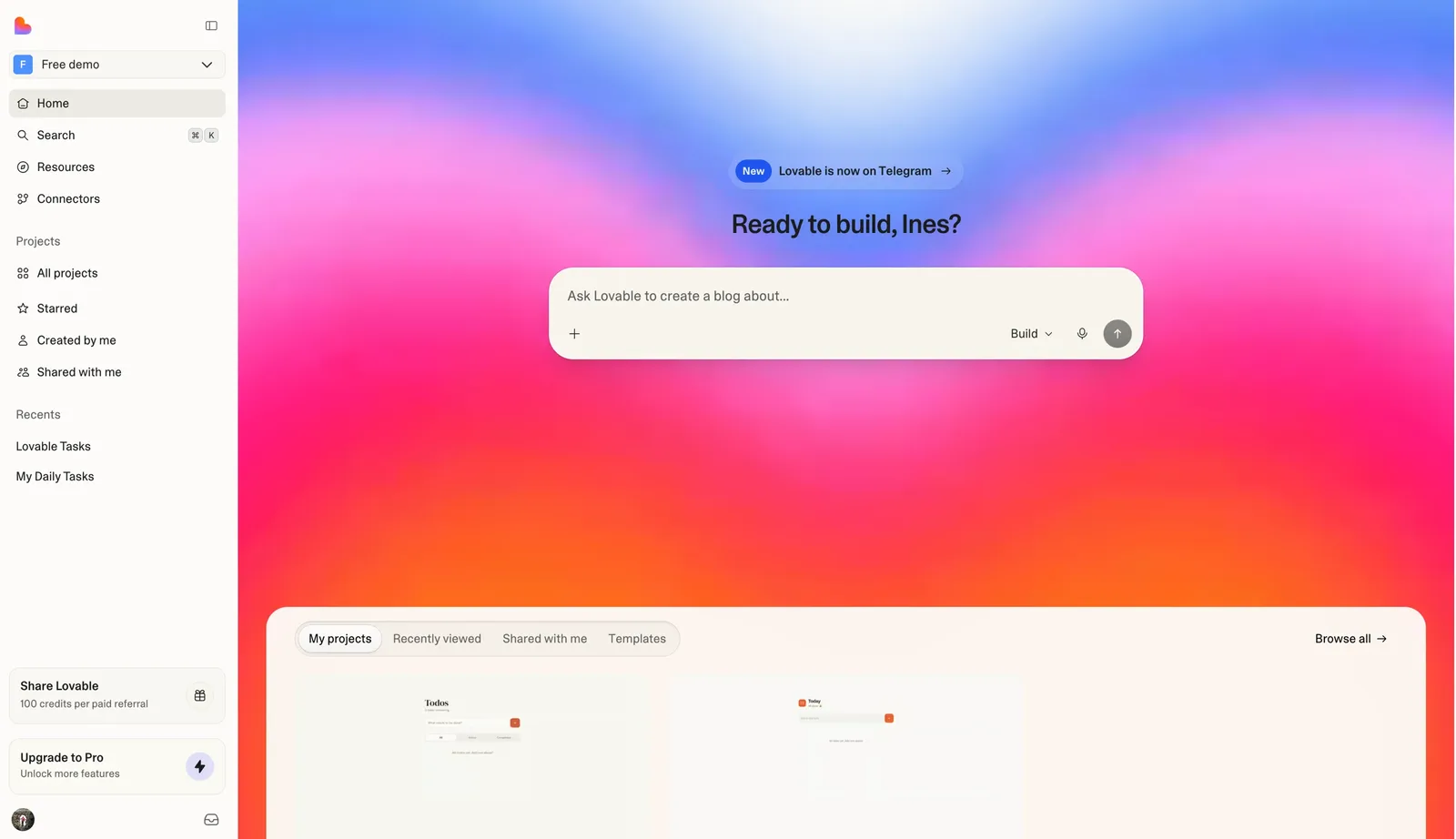
You start with a prompt such as "a booking app for my yoga studio with email reminders." Lovable generates the app, shows a live preview next to the chat, and keeps changing it as you ask for more.
It builds web apps only. The FAQ says it does not make native iOS or Android apps, though a published app can become a progressive web app, a website that installs on a phone's home screen. Lovable recently bought the team behind Radish AI to work on agents for businesses; our report on that deal has the details.
How Lovable works, from prompt to published app
The chat has three modes: Build changes the project, Plan drafts a plan for you to approve first, and Chat answers questions without touching the code. You can't choose the AI model.
Lovable also picks the stack, and you can't swap the framework or the database. The FAQ says apps created from May 13, 2026 use TanStack Start, a React framework that renders pages on the server. Older apps use React with Vite.
The backend: Lovable Cloud or your own Supabase
- Lovable Cloud is the built-in backend and is on by default. The Cloud docs list a database, user sign-in, file storage, realtime updates and edge functions (small pieces of server code for jobs like webhooks or payments). It is built on "Supabase's open-source foundation."
- Your own Supabase project. Supabase is a hosted Postgres database with sign-in and storage built in. The Supabase integration docs say Lovable designs the schema, writes changes as SQL, asks for your approval and saves migration files. This suits teams that want their own billing and dashboard.
GitHub sync and publishing
Lovable syncs projects to GitHub, GitLab or Bitbucket on any plan. The GitHub docs describe a two-way sync on one branch, usually main: edits in Lovable are pushed to the repository, and commits pushed there flow back.
Pressing Publish deploys the app to a lovable.app address with HTTPS, free on every plan. Paid plans add custom domains, and the code can be hosted anywhere. The FAQ says: "Your apps, code, and the content you create with Lovable are yours."
Who Lovable is for
The docs name teams inside companies building their own tools, agencies that extend the generated code, enterprises building internal apps, and individual founders, makers and students. It fits best where speed matters more than control: a prototype, an internal dashboard, a waitlist page. Developers who want their own framework will find the fixed stack limiting. For a head-to-head with a rival, see Lovable vs Base44.
How much Lovable costs
Lovable charges in credits, not seats, and workspaces can have unlimited members. Prices are from Lovable's subscription plans page, as of November 14, 2026.
| Plan | Price per month | Credits | What it adds |
|---|---|---|---|
| Free | $0 | 5 a day, up to 30 a month | Publishing to lovable.app, private projects, Git sync |
| Pro | From $25 ($21 billed yearly) | From 100 a month | Custom domains, no Lovable badge, code download, rollover |
| Business | From $50 ($42 billed yearly) | From 100 a month | Single sign-on, role-based access, security center |
| Enterprise | Custom | Volume-based | SCIM, audit logs, EU inference |
Pro scales from $25 for 100 credits to $2,250 for 10,000. Business costs twice as much per credit at the low end, up to $4,300 for 10,000. Every plan also gets 20 Cloud credits and 4 AI credits a month for running the backend and AI features in published apps, grants the credits docs call temporary. A Plan mode message costs 1 credit; Build requests cost more as tasks get complex. Monthly plan credits expire two months after issue.
Is Lovable safe
The researchers did not report a flaw in Lovable's own systems. They found exposed data in apps built on it, caused by how those apps' databases were set up.
What the researchers found
The Crissy Field post builds on a Handelsblatt report by Lina Knees from November 2, 2026. It looked at 159,041 Lovable projects found in Common Crawl web archives from December 2025 to September 2026, of which 34,545 used Supabase. The researchers checked what a site sends on first load, then made read-only requests with the same database key the page uses.
- 24,664 websites sent Supabase records with no login.
- 7,403 of them had tables containing email addresses.
- A German lifestyle forum exposed more than 80,000 profiles and more than 200,000 chat messages.
- A service provider exposed more than 1,000 records with passport numbers, expiry dates and nationalities.
- Event organizers and restaurants exposed tens of thousands of records, including phone numbers and payment information.
The researchers say the sample is not representative and the email figure "should therefore not be read as a confirmed data leak rate." They could not tell whether anyone misused the data, and they did not examine Lovable's built-in database, introduced in late 2025.
Why it happens
The usual cause is missing row-level security (RLS): database rules that decide which rows each user may read or change. Lovable's Supabase docs say "Missing RLS policies are the most common way app data gets exposed." Without them, the key the web page carries can read the table, and so can anyone who copies it.
The Crissy Field post notes that Lovable's marketing says no technical knowledge is needed, while its terms make customers responsible for their apps and data.
What Lovable says it does
On November 10, Lovable's head of security published a post on its security tooling. It says sign-in and access controls are on by default, including on free accounts, and that every publish triggers scanners that check the code, the database schema and the RLS policies. A deeper scan is free. A "Fix" button sends the agent an instruction to resolve a finding, an auto-fix setting handles many at once, and admins can block publishing while critical findings remain. Scheduled scans on paid plans are due this month.
The post does not mention the research. The Crissy Field post says Handelsblatt put its findings to Lovable but quotes no reply, and neither source carries a response from Lovable.
What this means if you build on Lovable
The scanners help, but they only advise unless you turn on blocking, and the Cloud docs call the check "Not a full audit." The researchers' advice is practical: before an app handles real customer data, check who can read each table, test it while logged out, repeat after big changes, and get a professional review when the data is sensitive.
Frequently asked questions
Is Lovable free?
Yes, there is a free plan. As of November 14, 2026, it gives 5 build credits a day, up to 30 a month, and lets you publish to a lovable.app URL; custom domains and code download need Pro, from $25 a month.
Is Lovable safe?
Lovable scans apps for security issues when you publish, including database access rules. But researchers found 24,664 Lovable-built sites sending database records without a login, mostly because tables lacked row-level security, so check your app's rules before it handles real data.
Is Lovable an app for iPhone or Android?
No. Lovable runs in the browser and builds web apps only, not native iOS or Android apps. A published app can be made a progressive web app that installs on a phone's home screen.
Who owns the code Lovable writes?
Lovable's FAQ says the apps, code and content you create are yours. You can sync the code to GitHub, GitLab or Bitbucket on any plan and host it anywhere.
Sources
- Welcome to LovableLovable
- Lovable FAQLovable
- Subscription plansLovable
- Plans and creditsLovable
- PricingLovable
- Lovable CloudLovable
- Supabase integrationLovable
- GitHub integrationLovable
- Find it, fix it, ship itLovable
- Lovable: Many apps built on the platform expose sensitive dataCrissy Field
- Hacker News discussionHacker News