Key takeaways
- Nvidia announced Rubin HPC at SC26 on November 16, 2026, with more than 50,000 CUDA cores on one GPU.
- The chip targets simulation and analytics used by AI agents in science and engineering, and is expected in 2028.
- Nvidia gave no memory, FP64, power, price or customer details; its Vera CPU racks ship first, from early 2027.
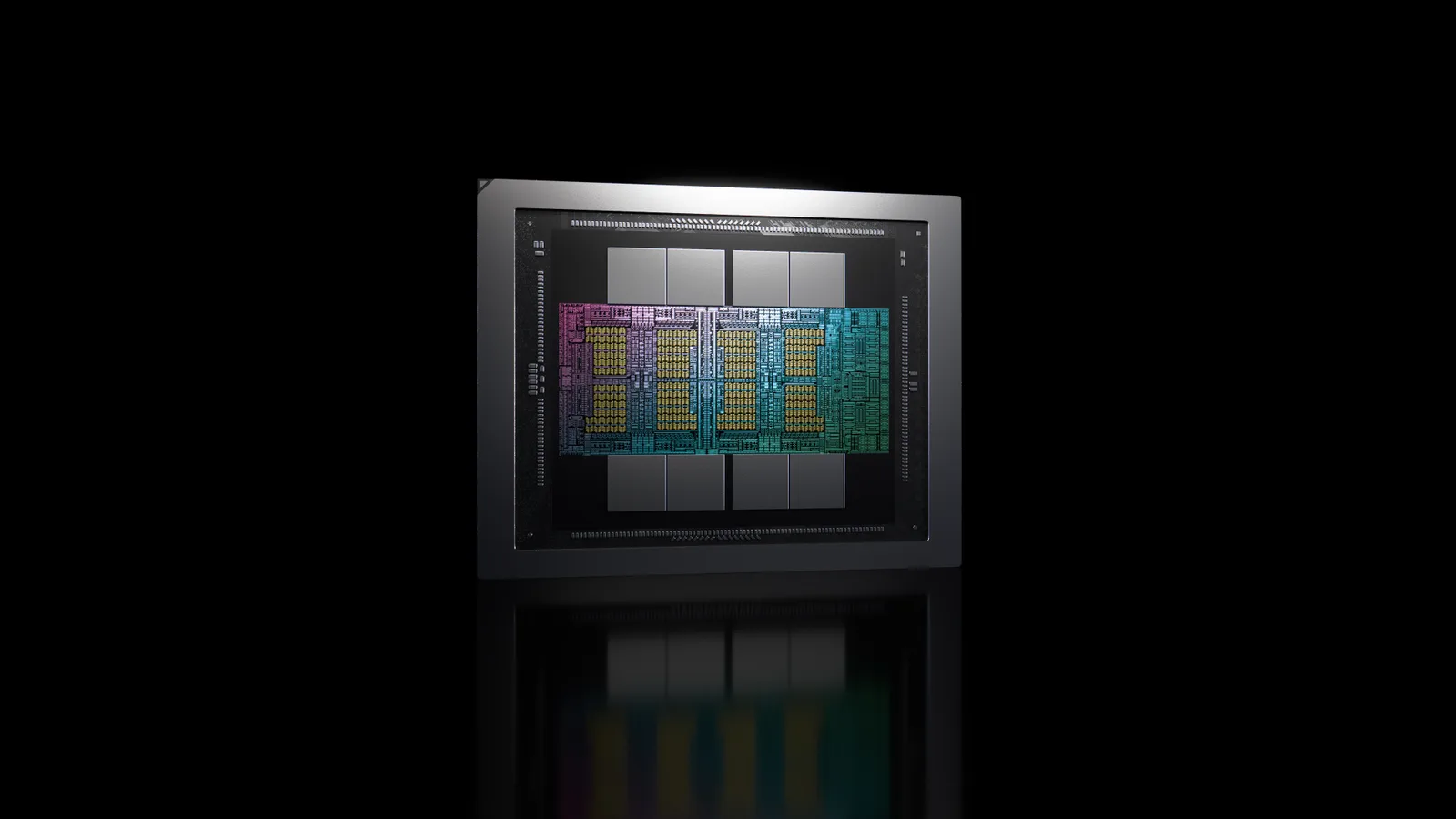
Nvidia announced Rubin HPC on November 16, 2026, a new GPU in its Vera Rubin family built for scientific simulation and data analytics rather than for training chatbots. In its announcement at the SC26 supercomputing conference, Nvidia says the chip has more than 50,000 CUDA cores, a record for one Nvidia GPU, and that it should be available in 2028.
The pitch is aimed at a new kind of customer: AI agents that run science. An agent testing a drug candidate or a wing design calls a simulation, reads the result and decides what to try next. If the simulation is slow, the agent is slow. Nvidia is betting that labs will want hardware tuned for that loop, not only for the language model at the center of it.
What Rubin HPC is built to do
Nvidia names four kinds of work the chip speeds up: sparse matrix operations, stencil computations (the grid math behind weather and fluid models), sorting and reductions. Those are the building blocks of physics simulation and large-scale analytics.
Three features carry the claim:
- More than 50,000 CUDA cores on one GPU. CUDA cores are the small processors that run Nvidia's parallel code.
- Sparse data acceleration. Much scientific data is mostly zeros. Nvidia says a new capability keeps the cores fed with the parts that matter.
- Seventh-generation NVLink, Nvidia's chip-to-chip link, so several GPUs can work on one problem.
"Rubin HPC accelerates the simulations agents use to test ideas and guide their next steps," said Ian Buck, Nvidia's vice president of hyperscale and high-performance computing.
What Nvidia didn't say
The post gives no memory size or bandwidth, no double-precision (FP64) figure, no power draw, no price and no customers. Those numbers decide whether a supercomputing center buys a chip, so the announcement reads as a roadmap marker more than a spec sheet. The core count is Nvidia's own figure, and nothing about the chip has been tested independently. For how today's Rubin parts compare with the previous generation, see our Vera Rubin vs Blackwell explainer.
Vera CPU racks arrive first, in early 2027
Nvidia also expanded its Vera CPU platform for supercomputers the same day. One liquid-cooled rack holds 192 Vera CPUs, each with 88 Nvidia-designed Olympus cores, for about 300TB of memory and 1 petabyte of storage. Nvidia says the rack runs the OpenFOAM motorBike airflow benchmark 1.9 times faster than x86 systems, at 2.4 times the performance per watt. Those are Nvidia's own tests.
Dell, HPE, Lenovo and Supermicro are expected to sell the racks from early 2027. The German Climate Computing Center (DKRZ) picked Vera CPUs for its HLRE-5 system, built by Bull and due in early 2028.
Why the timing matters
The announcement lands the day before Nvidia reports quarterly results, on November 17 after the market closes, its first report under interim CEO Colette Kress. Nvidia shares fell 4.1% to $156.14 on November 16. A 2028 chip won't move this quarter's numbers. What to watch on the earnings call is whether Nvidia names its first Rubin HPC customers or gives the specs it left out.
Sources
- NVIDIA Announces Rubin HPC — A New GPU to Accelerate Agents for Science, Engineering and AnalyticsNVIDIA
- NVIDIA Expands Vera CPU Platform to Accelerate Scientific DiscoveryNVIDIA
- NVIDIA Corporation (NVDA) quoteYahoo Finance
- At SC26, Nvidia debuts new Rubin HPC chip, scientific research librariesSiliconANGLE