Key takeaways
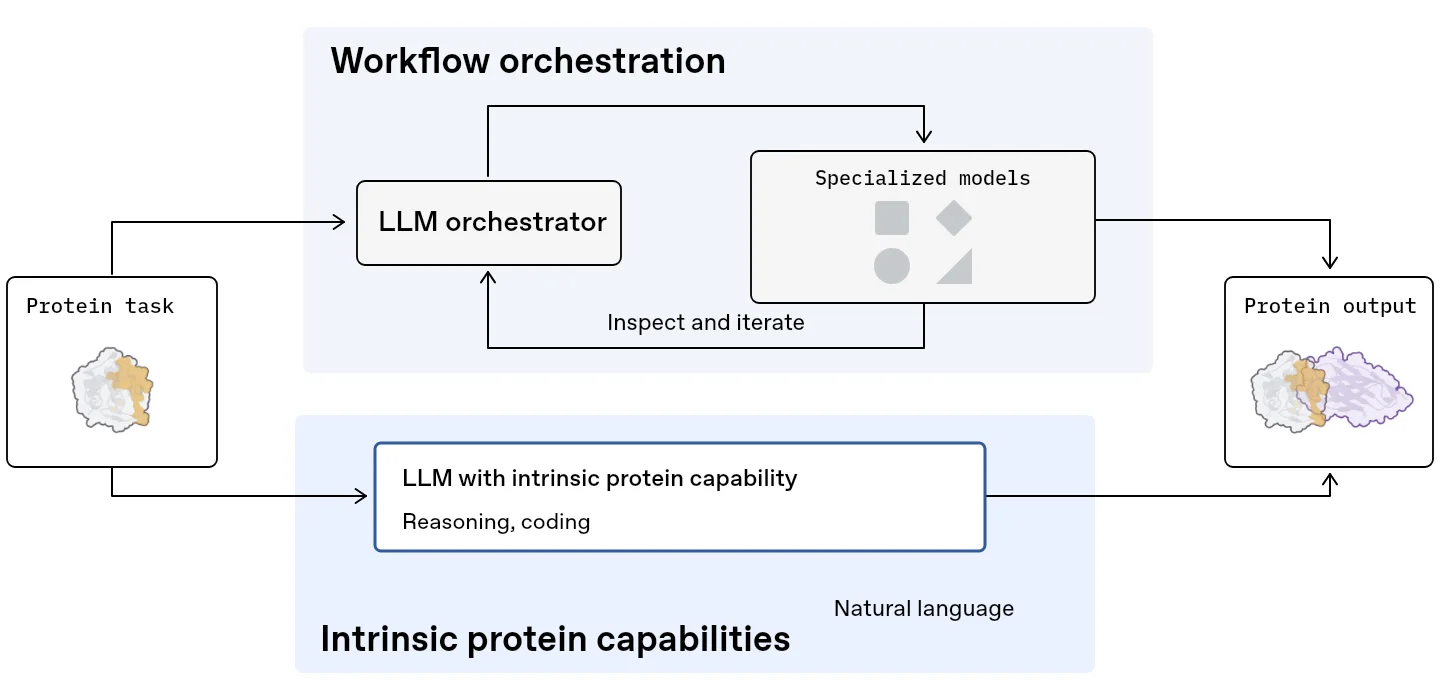
- OpenAI published results on November 24 saying GPT-6 models design protein shapes and sequences using reasoning and code, without calling specialized biology models.
- In lab tests with Onava, 35 of 322 designed minibinders, or 10.9%, bound their intended target across five targets.
- Predicting a full structure from a sequence remains weak: the best internal model averaged a TM-score of 0.38 against 0.93 for ESMFold2.
OpenAI said on November 24 that its GPT-6 models can design proteins with reasoning and code alone, without calling the specialized biology models the field has relied on since AlphaFold. In a wet-lab test run with the startup Onava, 322 designed minibinders were made and tested against five protein targets, and 35 of them, or 10.9%, stuck to the target they were designed for.
Protein design is the work of inventing a new molecule that latches onto something in the body: a receptor on a cancer cell, a signalling protein in an immune response. Until now it has been the job of models built for it, such as RFdiffusion for shapes and ProteinMPNN for sequences. A general model doing it from reasoning would make the tools of drug discovery look more like a chat prompt than a pipeline.
What was tested, and the numbers
OpenAI tested GPT-6.2, an earlier GPT-6 and GPT-5.6, plus an unnamed internal model that scored best on most tasks. The results come from the company's own preprint, GPT-6 as a Universal Foundation Model for Protein Biology, not from an outside lab.
The hit rates in the lab varied by target. Of the 322 minibinders, 18 of the successes were against IL-17A and 8 against VEGF-A, while TrkA produced one. Given existing minibinder structures with their sequences hidden, the models rewrote the sequences and 75 of 88 designs for MDM2 bound in the first screen, against 8 of 59 for PD-1. Redesigning antibody loops worked better: 128 of 182 new loops for six IL-4Rα nanobodies, or 70%, showed signs of binding.
On computational benchmarks the internal model passed 43.7% of the 30 MotifBench challenges, against 27.8% for RFdiffusion. On small-molecule docking it matched the observed pose in 96% of scored PoseBusters predictions, against 50% for DiffDock-L.
Where the models are still worse
Predicting a whole protein structure from its sequence, the thing AlphaFold is famous for, is where they fall down. The internal model averaged a TM-score of 0.38; ESMFold2 averaged 0.93. OpenAI writes that this "remains substantially harder for our models".
The lab work also was not end-to-end. Specialized models still supplied sequences and filtered candidates before anything was made, so this is not a GPT model designing a binder from scratch and handing it to a bench. OpenAI also notes that some sequence-recovery results may reflect memorization, and that binding is an early step: specificity, stability and any biological effect are untested.
Why it matters, carefully
If a general model really carries this much structural biology, labs could try designs without maintaining a stack of specialized tools, and the same model that reads the literature could propose the molecule. That is a real change in how the work is organized.
It is also a company reporting on itself, with a model it has not released, on tasks it chose. The honest reading of the 10.9% figure is that it is in the range where protein designers work, not that it beats them. OpenAI says the same capability could be misused and that its Preparedness Framework governs the risk assessment, without saying what limits that produced.
Some of the docking data and code is on OpenAI's GitHub. The next test that would settle anything is an outside lab running the same designs. OpenAI says it is moving on to harder targets, to effects beyond binding, and to RNA.
Frequently asked questions
Did GPT-6 design proteins without any other software?
Not in the wet-lab work. OpenAI says specialized models still supplied sequences and filtered candidates before anything was made, so the designs were not produced end to end by GPT-6 alone.
How does GPT-6 compare with RFdiffusion?
On the 30 MotifBench challenges, OpenAI's unnamed internal model passed 43.7% against 27.8% for RFdiffusion. In the lab, OpenAI notes the original RFdiffusion study reported higher binder hit rates than its own 10.9%.
Is the model that produced the best results available?
No. The strongest results came from an unnamed internal model, and the GPT-6.2 experiments used a pre-release version. OpenAI's page does not say either is available.
Where can I read the paper?
OpenAI published the preprint 'GPT-6 as a Universal Foundation Model for Protein Biology' as a PDF on its own site, and put some of the docking data and code on GitHub.
