Key takeaways
- As of November 18, 2026, Cursor and Codex both have free tiers and $8 plans, while Claude Code starts with Claude Pro at $20 a month.
- Cursor's pool covers Grok and Composer models; Claude, GPT and Gemini models cost extra at API list price on Premium and up.
- On Terminal-Bench 4.1, Claude Code with Opus 5.5 scored 65.8% and Codex with GPT-6.2 Astra 62.1%; Cursor has no entry.
Cursor vs Claude Code vs Codex comes down to three different bets. Cursor is an AI editor with its own agent and a choice of models. Claude Code is Anthropic's agent for the terminal, IDEs, a desktop app and the web, running Claude models. Codex is OpenAI's agent inside ChatGPT, with a CLI, an IDE extension and cloud tasks. As of November 18, 2026, Cursor and Codex both start at $8 a month and have free tiers, while Claude Code starts at $20 a month.
This comparison is based on the products' docs, pricing pages and published benchmark results, read on November 18, 2026, not on hands-on testing.
Cursor vs Claude Code vs Codex at a glance
| Cursor | Claude Code | Codex | |
|---|---|---|---|
| What it is | AI editor and coding agent | Agentic coding tool, one engine behind several apps | OpenAI's coding agent in ChatGPT |
| Where it runs | Desktop editor, CLI (agent), cloud agents on the web, iOS app, Slack, GitHub, Linear |
Terminal, VS Code, Cursor, JetBrains, desktop app, web, Claude mobile app, Slack | ChatGPT desktop, mobile and web apps, Codex CLI, IDE extension, Codex Cloud |
| Free tier | Yes, limited agent requests | No | Yes, limited |
| Cheapest paid plan | Plus, $8 a month (Grok and Cursor models only) | Pro, $20 a month ($17 billed annually) | Go, $8 a month; Plus, $20 a month for CLI, IDE and web |
| Heavy-use plans | Super $100, Ultra $200 | Max $100, Ultra $200 | Pro at $100, $200 or $500 |
| Team price | From $30 per user a month | Standard seat $25 ($20 billed annually) | Business $25 per user ($20 billed annually) |
| Models | Grok 4.7, 4.6, 4.5, Composer 2.5; Claude, GPT, Gemini and others at API price on Premium and up | Claude Opus, Sonnet, Haiku; Fable on some plans | OpenAI's GPT-6 family, including GPT-6.2 Astra and Sol |
| How limits work | Weekly pool, then top-offs | Five-hour window plus weekly limits | Five-hour estimates, weekly limits may apply, credits |
| Terminal-Bench 4.1 best | No Cursor entry | 65.8% (Opus 5.5 and Fable 5.2) | 62.1% (GPT-6.2 Astra) |
Prices are in US dollars, exclude tax, and are as of November 18, 2026.
What each one is
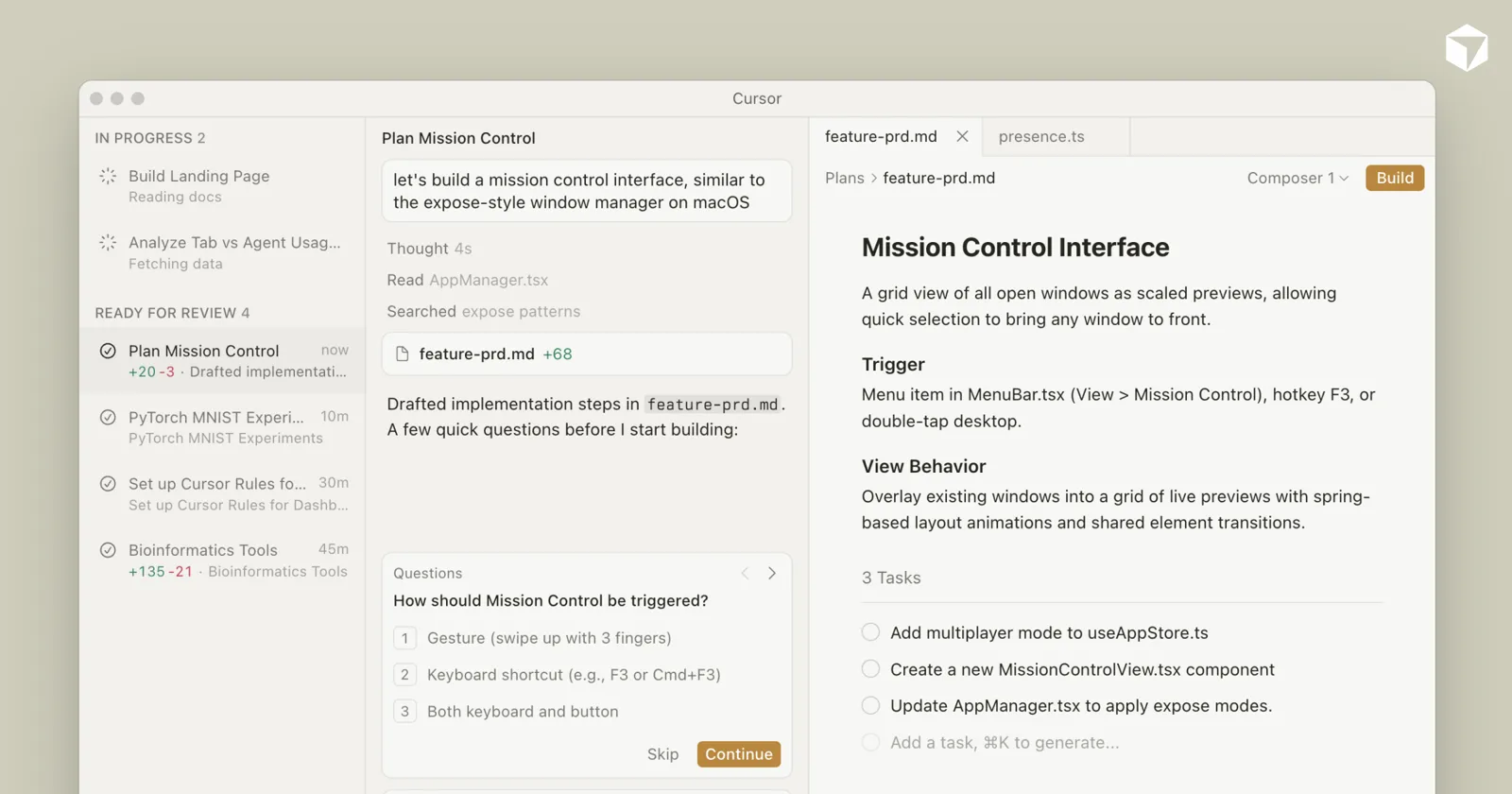
Cursor is an editor first. You work in Cursor's own desktop editor, with Plan Mode, rules, skills, plugins and MCP (the Model Context Protocol, an open standard for connecting AI tools to other software). The Cursor CLI brings the same agent to the terminal with Agent, Plan and Ask modes and a print mode for scripts and CI. Cloud agents run in isolated virtual machines and can be started from the web, the iOS app, Slack, GitHub, Bitbucket, Linear or the API.
Cursor's plans have also changed shape. The pricing page now sells one subscription that covers Cursor, Grok chat and X features such as the premium checkmark, and it says subscriptions are sold only through X Subscription Corp. Cursor's docs list Grok 4.5 to 4.7 as Cursor models, "jointly trained by Cursor and SpaceXAI".
Claude Code is one agent with many front ends. Anthropic's docs say every surface connects to "the same underlying Claude Code engine", so CLAUDE.md files, settings and MCP servers carry over. It runs in the terminal, in VS Code and JetBrains, as an extension inside Cursor, in a desktop app and on the web.
Codex is part of ChatGPT. You don't buy it separately. OpenAI's docs list it in the ChatGPT desktop, mobile and web apps, the Codex CLI, an IDE extension and Codex Cloud, plus Slack and GitHub integrations and a GitHub Action.
Prices and plans as of November 18, 2026
Cursor
| Plan | Monthly | Yearly | Usage |
|---|---|---|---|
| Free | $0 | Limited | |
| Plus | $8 | $80 | Base pool, Grok and Cursor models only |
| Premium | $30 | $300 | 4x Plus, adds cloud agents, Bugbot code review, third-party models |
| Super | $100 | $1,000 | 15x Plus, priority access at peak times |
| Ultra | $200 | $2,000 | 50x Plus |
| Teams | From $30 per user | 4x to 50x Plus, pooled |
Yearly prices come from Cursor's plan docs. Enterprise is custom.
Claude Code
| Plan | Price | Claude Code | Usage |
|---|---|---|---|
| Free | $0 | No | Limited |
| Pro | $20 a month, or $17 billed annually | Yes | Base limits every 5 hours and every week |
| Max | $100 a month | Yes | 5x Pro |
| Ultra | $200 a month | Yes | 10x Pro each week, no 5-hour limit for verified accounts |
| Team | Standard $25, Premium $125 per seat a month ($20 and $100 billed annually) | Yes | Premium seats get 5x a standard seat |
Enterprise is $20 per seat a month billed annually, with a 20-seat minimum, plus usage at API rates. Source: claude.com/pricing. For running Claude Code on API credits instead, see our guide to Claude Code pricing and API cost.
Codex
| Plan | Price | Codex |
|---|---|---|
| Free | $0 | Quick coding tasks; GPT-6 Luna in the desktop app, subject to rollout |
| Go | $8 a month | Lightweight coding tasks |
| Plus | $20 a month | Web, CLI, IDE extension, iOS, plus code review and Slack |
| Pro | $100, $200 or $500 a month | Everything in Plus, no five-hour limit for now |
| Business | $25 per user a month, or $20 billed annually | Shared workspace, workspace credits |
| Enterprise and Edu | Through sales | Flexible pricing with no fixed rate limits |
Source: Codex pricing.
How the usage limits differ
Cursor uses a weekly pool. Each paid plan gets one pool, shared across the editor, CLI, cloud agents and Grok apps. Only Grok and Composer models draw from it. Claude, GPT and Gemini models are billed at API list price from prepaid credit from the first request, and only on Premium and up. Cursor's docs give Claude 4.6 Sonnet at $3 input and $15 output per million tokens as an example. Grok 4.7 beyond the pool costs $2 input and $6 output.
Claude Code shares limits with chat. Limits reset every five hours and every week. Anthropic gives no message counts, only multiples of Pro: 5x on Max, 10x a week on Ultra.
Codex publishes estimates. On Plus and standard Business seats, OpenAI estimates these local messages per five hours: 6 to 50 on GPT-6.2 Astra, 17 to 180 on GPT-6.2 Sol, 35 to 285 on GPT-6.1 Terra and 350 to 3,000 on GPT-6 Luna. Weekly limits may also apply, and cloud tasks use more of the allowance than local work. When you run out, Plus and Pro users can buy credits.
Models available in each
- Cursor: Grok 4.7 (with Fast and 500k variants), Grok 4.6, Grok 4.5 and Composer 2.5 in the pool. Its docs list third-party models from Anthropic, OpenAI, Google, Z.ai, Moonshot, Meta and DeepSeek.
- Claude Code: Anthropic's models only through a Claude plan: Opus, Sonnet and Haiku on Pro and up. Fable is available through usage credits on Pro and up to 50% of weekly limits on Max and Ultra. The terminal CLI, VS Code and JetBrains versions also work through third-party cloud providers.
- Codex: OpenAI's models. The pricing page lists GPT-6.2 Astra, GPT-6.2 Sol, GPT-6.1 Terra, GPT-6 Luna and older GPT-6 versions.
Agent features
| Feature | Cursor | Claude Code | Codex |
|---|---|---|---|
| Project instructions | Rules | CLAUDE.md, also reads AGENTS.md | AGENTS.md, rules |
| Extensions | Skills, plugins, MCP | Skills, hooks, MCP | Skills, plugins, MCP, hooks |
| Parallel agents | Cloud agents | Subagents, background agents | Subagents |
| Cloud runs | Cloud agents, Premium and up | Web sessions, cloud scheduled tasks | Codex Cloud, Plus and up |
| Code review | Bugbot, Premium and up | GitHub Code Review, GitHub Actions | Code review, GitHub Action |
| Scripting | agent -p |
claude -p, Agent SDK |
CLI, SDK |
| Scheduling | Automations, Premium and up | Cloud, desktop and /loop tasks |
Scheduled tasks |
| Safety controls | Enterprise network and MCP controls | Permissions and hooks | Sandboxing, permission profiles, approvals |
The tools also overlap. Claude Code installs as an extension in Cursor, and the Codex docs list Cursor among the editors its extension supports.
Published benchmarks
Terminal-Bench, hosted by Stanford, Harbor and the Laude Institute, tests agents on tasks in a real terminal and lists the agent as well as the model. On version 4.1 of its leaderboard, read November 18, 2026:
| Agent and model | Resolution rate | Model release date |
|---|---|---|
| Claude Code, Opus 5.5 (max) | 65.8% ± 3.1% | September 22, 2026 |
| Claude Code, Fable 5.2 (max) | 65.8% ± 2.8% | November 9, 2026 |
| Claude Code, Sonnet 5.5 (max) | 63.9% ± 3.0% | September 28, 2026 |
| Codex, GPT-6.2 Astra (max) | 62.1% ± 2.3% | November 17, 2026 |
| Codex, GPT-6.2 Sol (max) | 61.5% ± 2.8% | November 17, 2026 |
| Grok Build, Grok 4.7 (xhigh) | 38.8% ± 3.6% | September 21, 2026 |
The top spot belongs to neither: GitHub Copilot with Copilot Fusion scored 71.2%. Cursor has no entry at all. The Grok 4.7 row is xAI's Grok Build agent, not Cursor's, so it shows the model that fills Cursor's pool, not Cursor's agent.
The gap between Claude Code and Codex is a few points and the error bars overlap. Cost differs more. The leaderboard puts the Claude Code run with Opus 5.5 at $4.7k for the full benchmark and the Codex run with GPT-6.2 Sol at $0.3k.
Which one fits
Pick Cursor if you want an editor and want to switch between models. Claude and GPT models cost extra per token.
Pick Claude Code if you work in the terminal or want one agent across terminal, IDE, desktop and CI, and you're happy with Claude models. It leads Codex on Terminal-Bench 4.1 by a small margin, at a higher cost per run.
Pick Codex if you already pay for ChatGPT or want a free way in. It is the only one of the three with published message estimates and a plan above $200.
For two-way comparisons, see Claude Code vs Cursor, Claude Code vs Codex and Codex vs Cursor.
Frequently asked questions
Is Cursor or Claude Code free?
Cursor has a free plan with limited agent requests. Claude Code is not included in the free Claude plan; it starts with Pro at $20 a month, as of November 18, 2026. Codex also has a limited free tier.
How do Cursor and Claude Code usage limits compare?
Cursor gives each paid plan a weekly usage pool for Grok and Composer models, and bills Claude, GPT and Gemini models separately at API price. Claude Code limits reset every five hours and every week, and Anthropic describes them as multiples of Pro rather than message counts.
Can you use Claude Code or Codex inside Cursor?
Yes. Claude Code installs as an extension in Cursor, and the Codex docs list Cursor among the editors its IDE extension supports.
Which is better for coding, Cursor, Claude Code or Codex?
No independent benchmark covers all three. On Terminal-Bench 4.1, Claude Code with Opus 5.5 scored 65.8% and Codex with GPT-6.2 Astra 62.1%, with overlapping error bars, and Cursor's agent has no entry.
Sources
- Cursor pricingCursor
- Cursor plans and usageCursor
- Cursor docsCursor
- Cursor CLI overviewCursor
- Cursor Cloud AgentsCursor
- Claude pricingAnthropic
- Claude Code overviewAnthropic
- Codex pricingOpenAI
- ChatGPT docsOpenAI
- Codex IDE extensionOpenAI
- ChatGPT pricingOpenAI
- Terminal-Bench 4.1 leaderboardTerminal-Bench