Key takeaways
- As of November 16, 2026, Codex comes with every ChatGPT plan, from Free and Go at $8 to Plus at $20 and Pro from $100 a month.
- GitHub Copilot has a free plan, Pro at $10 a month with $15 in AI credits, Pro+ at $39 and Max at $100.
- Copilot adds unlimited editor autocomplete on paid plans and models from six companies, and can run an OpenAI Codex agent on GitHub in public preview.
Codex vs Copilot comes down to what you already pay for and how you like to work. As of November 16, 2026, OpenAI's Codex comes with every ChatGPT plan, from Free to Pro at $100 a month and up, and is built for handing an agent whole tasks. GitHub Copilot starts free, costs $10 a month on Pro, and adds autocomplete in your editor and a choice of models from several companies.
The two overlap. Copilot lists OpenAI's GPT models, and GitHub now lets Copilot subscribers hand tasks to an OpenAI Codex agent, in public preview.
This comparison is based on the products' docs, pricing pages and published claims. Neither product was tested for it.
Codex vs Copilot at a glance
| OpenAI Codex | GitHub Copilot | |
|---|---|---|
| Made by | OpenAI | GitHub (Microsoft) |
| How you pay | Included in ChatGPT plans, or per token with an API key | Copilot plans with monthly AI credits |
| Free tier | Yes, ChatGPT Free, with GPT-6 Luna in the desktop app, subject to rollout | Yes, 2,000 inline suggestions a month and limited chat and agent usage |
| Entry paid plan | ChatGPT Go, $8 a month; Plus, $20 a month | Pro, $10 a month, $15 in AI credits |
| Top individual plan | ChatGPT Pro, $100, $200 or $500 a month | Max, $100 a month, $200 in AI credits |
| Where it runs | ChatGPT desktop, web and mobile apps, Codex CLI, IDE extension, Codex Cloud | VS Code, Visual Studio, JetBrains IDEs, Eclipse, Xcode, GitHub website, GitHub Mobile, Copilot CLI |
| Models | OpenAI models, such as GPT-6.1 Sol and GPT-6 Luna | Anthropic, OpenAI, Google, xAI, Microsoft and Moonshot models, plus Fusion routing |
| Inline autocomplete | Not described in OpenAI's IDE docs | Yes, unlimited on paid plans, no credits used |
| Cloud tasks and pull requests | Codex Cloud runs tasks remotely, then you open a pull request | Coding agent takes an issue and returns a pull request, on Pro and above |
| Code review on GitHub | Yes, through the ChatGPT Codex connector | Yes, on Pro and above |
Prices are in US dollars, read on November 16, 2026, from OpenAI's Codex pricing page, GitHub's plans page and GitHub's plans docs.
What each one is
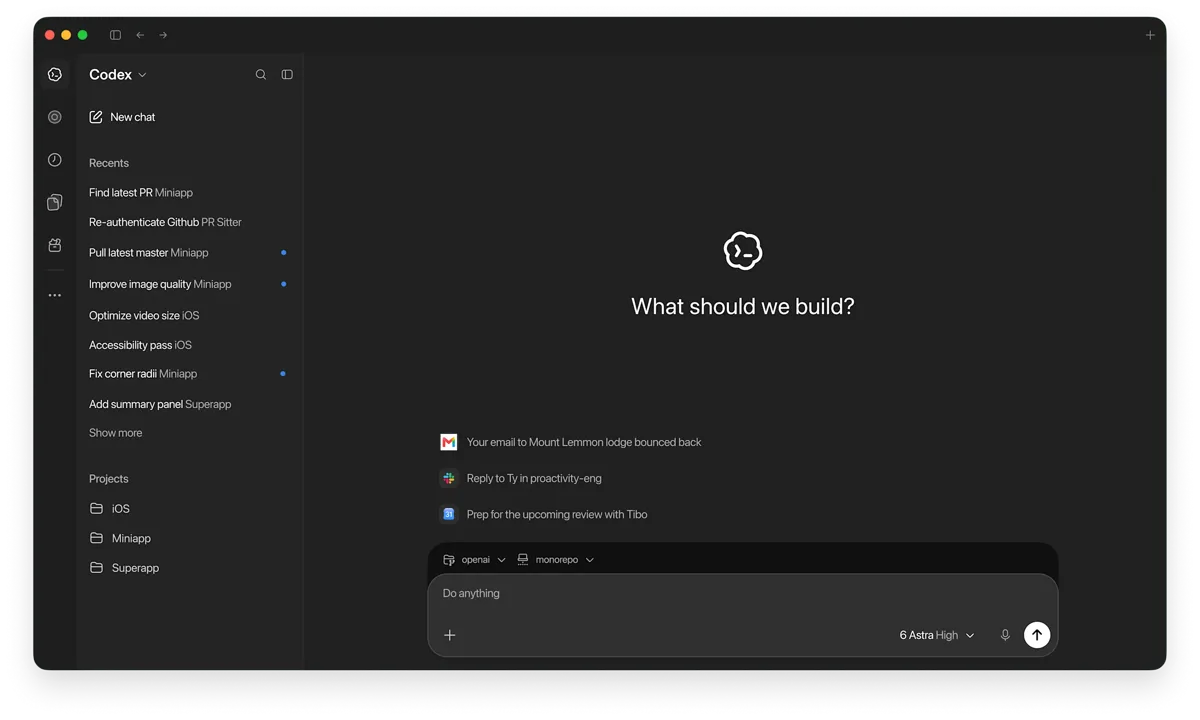
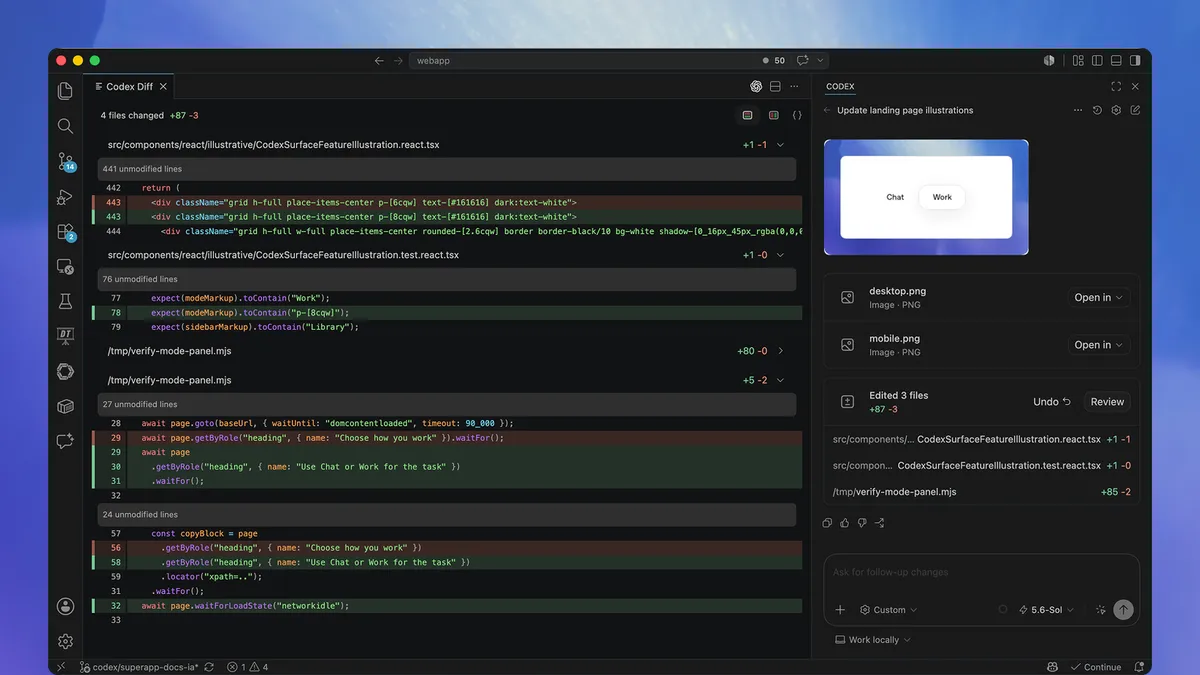
Codex is OpenAI's coding agent, and it lives inside ChatGPT. OpenAI's docs list six places to use it: the ChatGPT desktop app, the mobile app, the web, the Codex CLI, an IDE extension and Codex Cloud. The CLI reads and edits files in your repository and runs the tools you have installed. It installs on macOS and Linux with one command, and you sign in with your ChatGPT account:
curl -fsSL https://chatgpt.com/codex/install.sh | sh
codex
The CLI also runs unattended with codex exec, for scripts and CI (continuous integration). In the cloud, each task gets its own environment with your repositories, install script, secrets and tools, and keeps working while your computer sleeps. When it finishes, you look at the changes and open a pull request.
Copilot started as autocomplete and now does both kinds of work. GitHub's docs describe an assistive side, which suggests code as you type and answers questions, and an agentic side, where "you describe a goal, and Copilot can work through multiple steps." It runs in five IDE families, on the GitHub website, in GitHub Mobile and in the Copilot CLI. Its coding agent picks up an issue on GitHub and returns a pull request.
In short, Codex is an agent you give tasks to, and Copilot is an editor and GitHub assistant with an agent on top.
Codex vs Copilot pricing
As of November 16, 2026:
| Plan level | ChatGPT (includes Codex) | GitHub Copilot |
|---|---|---|
| Free | $0, GPT-6 Luna at Standard speed in the desktop app, subject to rollout | $0, 2,000 inline suggestions a month, limited chat and agent usage |
| Low | Go, $8 a month | Pro, $10 a month, 1,500 AI credits ($15) |
| Middle | Plus, $20 a month | Pro+, $39 a month, 7,000 AI credits ($70) |
| Top | Pro, $100, $200 or $500 a month | Max, $100 a month, 20,000 AI credits ($200) |
| Teams | Business, $20 per user a month billed annually, $25 billed monthly, 2+ users | Business, $19 per seat a month, 1,900 AI credits per user |
| Enterprise | Contact sales | Enterprise, $39 per seat a month, 3,900 AI credits per user |
The two count usage in different ways.
Codex counts messages per five hours. OpenAI gives Plus and standard Business seats an estimated range of local messages every five hours, by model. It calls these estimates, not fixed limits, and says weekly limits may also apply:
| Model | Plus, local messages per five hours |
|---|---|
| GPT-6 Astra | 5 to 45 |
| GPT-6.1 Sol | 15 to 160 |
| GPT-6.1 Terra | 35 to 285 |
| GPT-6 Sol | 15 to 150 |
| GPT-6 Luna | 350 to 3,000 |
Pro currently has no five-hour limit. Cloud tasks may use more of the allowance than local messages, and Plus and Pro users who run out can buy credits. An OpenAI API key runs Codex in the CLI, SDK or IDE extension at API prices, but without cloud features such as GitHub code review and Slack.
Copilot counts AI credits. One credit is $0.01, so Pro's 1,500 credits are worth $15. How many credits a request uses depends on the model and the task. Code completions and next edit suggestions use no credits and are unlimited on paid plans. Paid users can set a budget for extra credits, and $10 buys 1,000.
At the low end Copilot is cheaper for a coder who mostly wants autocomplete: $10 against ChatGPT Plus at $20. But ChatGPT Plus also buys the rest of ChatGPT, so if you already pay for it, Codex costs you nothing extra. At $100 a month both have a top plan; which gives more depends on the models you run. For more on how Codex is bundled, see Is Codex included in ChatGPT Plus?, and for the rest of ChatGPT's caps, ChatGPT usage limits by plan.
Which models each one uses
Codex runs OpenAI's models. The pricing page lists GPT-6 Astra, GPT-6.1 Sol, GPT-6.1 Terra, GPT-6 Sol and GPT-6 Luna for Codex, among others.
Copilot lists models from six companies on every individual plan, including OpenAI's GPT-6.1 Sol and GPT-6 Luna, Anthropic's Claude Opus 5.5 and Sonnet 5.5, Google's Gemini 4 models, xAI's Grok 4.7, Microsoft's MAI-Code-1.1-Flash and Moonshot's Kimi K3. So the same OpenAI models that power Codex are also on the Copilot menu.
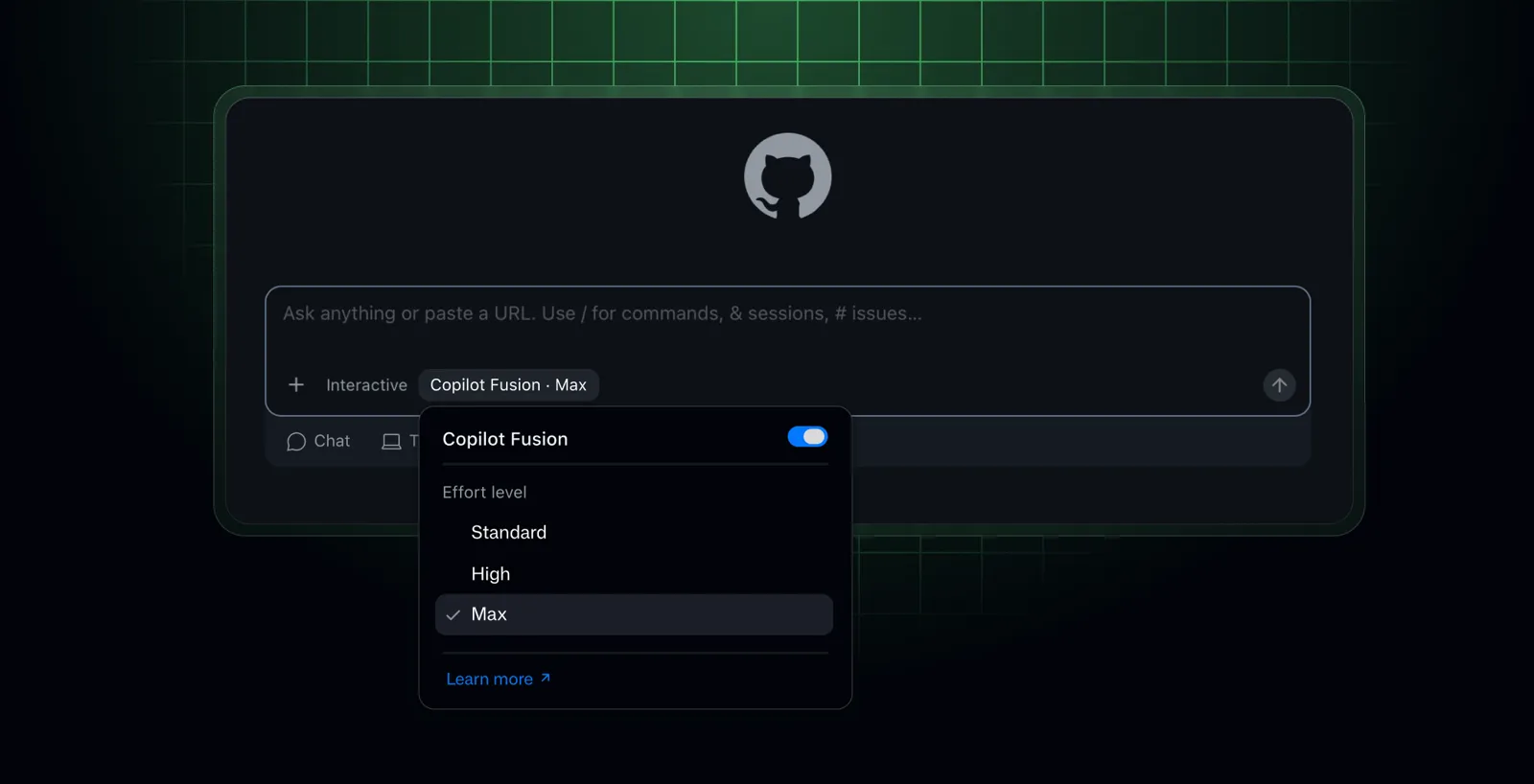
Copilot also has Fusion, generally available since October 28, 2026, which picks the models for each prompt. Free and Pro get the Standard level; Pro+ and Max also get High and Max. GitHub says Fusion Max scored 60 on the Artificial Analysis Coding Agent Index, within two points of Claude Code with Opus 5.5 Max, at about half the cost per task. That is GitHub's claim. The Artificial Analysis page did not show per-agent scores when we read it, and no independent benchmark we could read compares Codex and Copilot directly.
Using Codex inside Copilot
The two products now connect. GitHub's docs describe an OpenAI Codex coding agent that runs on the Codex SDK and is paid for by your Copilot subscription. You assign it an issue, start it from a repository's Agents tab, or mention it in a pull request comment, and it opens a pull request for review. It is in public preview.
The details:
- Sessions use GitHub Actions minutes and AI credits, based on the model and tokens. Within your included allowance there is no extra cost.
- The docs list GPT-5.3-Codex, GPT-5.4 nano and Auto as its models, so it does not get OpenAI's newest GPT-6 models.
- It must be turned on first, in your account settings for Pro, Pro+ and Max, or by an admin for Business and Enterprise.
- In the Codex extension for VS Code, the "Sign in with Copilot" option is only for Pro+ and Max subscribers.
GitHub's plans page is not consistent here. Its table marks third-party agents as Pro+ and Max only, while the Pro plan's own list includes "Access to 3rd party agents (Claude Code and Codex)." Check your account settings before you count on it.
Features that differ
- Autocomplete. Copilot suggests code as you type, unlimited on paid plans. OpenAI's IDE docs describe a chat sidebar and task delegation, not inline suggestions.
- Editors. The Codex extension installs in VS Code, Cursor, Windsurf and VS Code Insiders, and Xcode and JetBrains IDEs have their own Codex integrations. Copilot covers VS Code, Visual Studio, JetBrains IDEs, Eclipse and Xcode.
- Customization. The Codex CLI supports skills, plugins, MCP servers (a standard way to connect an agent to outside tools) and subagents. Copilot supports instructions, reusable prompts, agent skills and custom agents.
- Code review. Codex can review pull requests automatically once the ChatGPT Codex connector is installed, and the CLI reviews uncommitted changes locally. Copilot reviews pull requests on GitHub from Pro up.
- Beyond code. Codex sits in the ChatGPT app, and its docs list browser use, computer use, voice, image generation and scheduled tasks. Copilot stays close to GitHub: issues, pull requests and repositories.
Which one to pick
Pick Codex if you already pay for ChatGPT, mostly hand off whole tasks, and want to run them from a terminal, a desktop app or the cloud. Pick Copilot if you want autocomplete in your editor, a $10 starting point, or models from several companies in one tool. You don't have to choose all the way: Copilot Pro+ and Max can run the Codex agent on GitHub, and both install as extensions in VS Code.
For another pairing, see Claude Code vs GitHub Copilot. Check both pricing pages before you pay. OpenAI's page carries no update date, and its limits and model lists change often.
Frequently asked questions
Is Codex better than GitHub Copilot?
Neither is better for everyone. Codex suits handing off whole tasks from ChatGPT, a terminal or the cloud, while Copilot adds editor autocomplete, a $10 plan and models from several companies. This comparison is based on docs and published claims, not our own tests.
Is Codex cheaper than Copilot?
Copilot Pro costs $10 a month, against $8 for ChatGPT Go and $20 for ChatGPT Plus, as of November 16, 2026. If you already pay for ChatGPT, Codex costs nothing extra.
Can you use Codex in GitHub Copilot?
Yes, in public preview. GitHub's docs describe an OpenAI Codex coding agent that runs on your Copilot subscription, uses AI credits and GitHub Actions minutes, and must be turned on in settings first.
What is the difference between Codex CLI and Copilot CLI?
Codex CLI runs OpenAI's models and signs in with a ChatGPT account or an API key. Copilot CLI is GitHub's terminal tool and draws on your Copilot plan and its choice of models.
Sources
- Codex pricingOpenAI
- GitHub Copilot plansGitHub
- Plans for GitHub CopilotGitHub Docs
- Codex docsOpenAI
- Codex CLIOpenAI
- Codex IDE extensionOpenAI
- Codex CloudOpenAI
- Codex code reviewOpenAI
- What is GitHub Copilot?GitHub Docs
- Where to use GitHub CopilotGitHub Docs
- OpenAI Codex coding agentGitHub Docs
- About third-party coding agentsGitHub Docs
- Route and orchestrate models with GitHub Copilot FusionGitHub